

Trump’s Return and the US-China Duel. Europe at a Crossroads, Waiting to Know What to Do with Russia
Likely American isolationism could open up room for manoeuvre for Europe, if the old continent were able to free itself from the USA and act in a truly united way.
By Valerio Giunta, CEO of Startup Italia and Founder of Banking People
With Donald Trump returning to the White House, his "America First" policy is set to redraw global dynamics. At the heart of this strategy is the reassertion of American supremacy in technology, the economy and defence, pursued through a team of collaborators closely tied to the President. The confrontation with Cina, identified as the main rival, becomes the centrepiece of a new geopolitical era dominated by the so-called "G2", leaving Europe, the third major player on the global economic chessboard, in a position of fragility and uncertainty.

Trump has already shown, during his previous terms, that he wants to deal with Cina as the main global rival. With figures such as Marco Rubio at the State Department and Mike Waltz as National Security Adviser, the new American administration appears set on a hard-fought confrontation with Pechino. The symbolic invitation extended to Chinese President Xi Jinping for Trump's inauguration, even knowing it would be rejected, is a gesture that shows the intention to keep a thread of dialogue open with the rival, but on the terms dictated by Washington.
This constant tension between the two powers will very likely lead to an escalation of geopolitical confrontation, with not only economic but also strategic implications for the rest of the world. The "G2" in fact represents a bipolar system that tends to exclude other international actors, relegating them to marginal roles. Europe, in this context, therefore finds itself at a crossroads. On the one hand, Trump's protectionism, with the likely further tightening of tariffs on exports from Europe, risks hitting an economy already under strain very hard. Trump's stated goal - as recently affirmed by authoritative economists - is to reduce Europe's trade surplus with the United States, threatening key sectors of the old continent. After all, the USA have a public debt that is now out of control (more than 36 trillion dollars...) and, in order not to drown, they must somehow react.
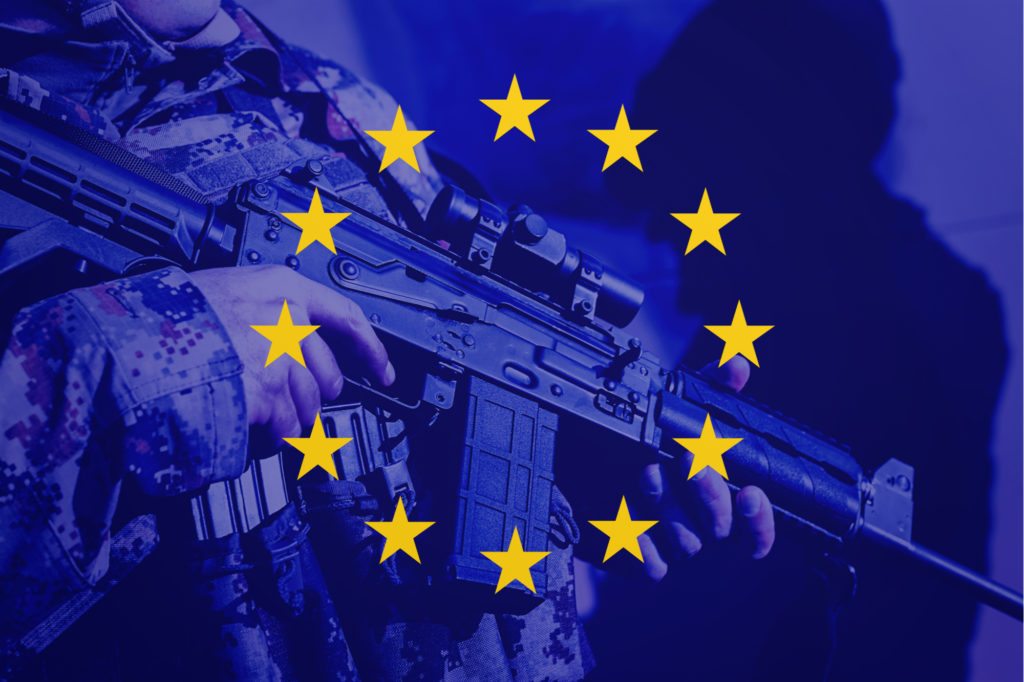
Seen from another angle, likely American isolationism could also be an opportunity, as it could open up room for manoeuvre for Europe if it were capable of acting in a truly united way and with a global continental vision, without distinguishing between northern and southern countries. A common policy on economic and strategic issues, in fact, would allow the EU to increase its influence globally, strengthening its geopolitical autonomy. However, internal divisions and contradictions in relations with Cina - swinging between partnership, competition and systemic rivalry - are a significant obstacle. As Chinese leaders often point out, Europe looks like a "traffic light with all the lights on", unable to develop a clear strategy.
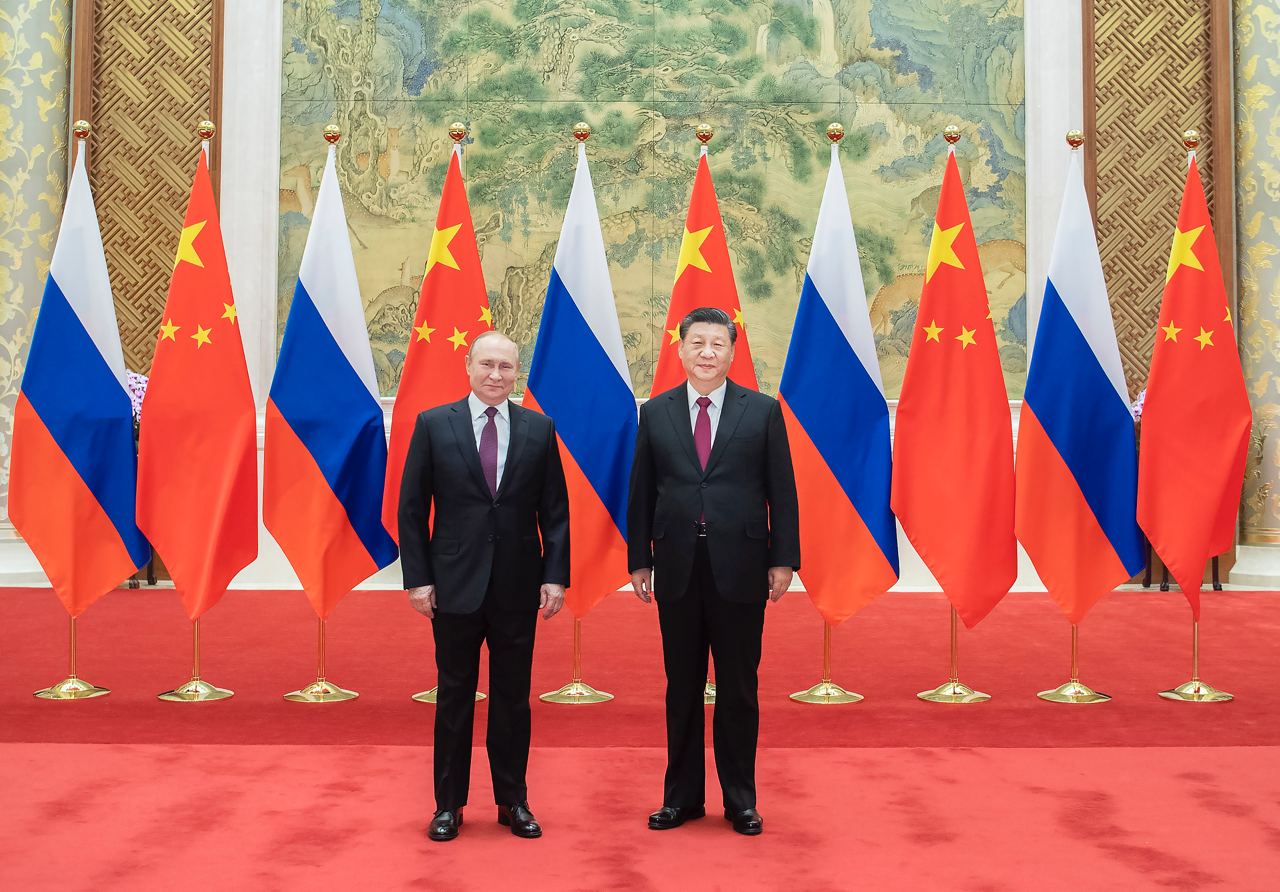
Another scenario that cannot be ruled out - and is rather worrying - is a global agreement between the United States and Cina. In this case, Europe, lacking internal cohesion, risks being crushed between the two superpowers. The possibility of a convergence on economic and strategic issues between Washington and Pechino, in fact, would further exclude the old continent from major global decisions, relegating it to the role of passive spectator. A strategic choice for the future is therefore needed, since the most destabilising outcome of a hypothetical US-Cina agreement would see Europe include Russia - as would be natural for historical, cultural and geographical reasons - among its closest economic partners. Such a (and for now only) fanciful scenario would be a real strategic nightmare for Washington and Pechino, both little inclined to deal with a united Euroasian bloc. But in that event it is likely that the two superpowers would do - or are they already doing? - everything they could to ensure that this does not happen.
The alternative to all these scenarios is a stronger BRICS, which we have already discussed in a previous article; this scenario would force the West to stop playing petty games with each other. In any case, it remains crucial for Europe not only to rediscover internal cohesion, but to stop being subservient to USA interests, starting now to rethink what its own relationship with Russia could be immediately after the possible ceasefire secured by Trump but still seemingly far off. Russia, in fact, holds the fossil raw materials (gas above all, but not only) that Europe needs as much as air, and that are today being bought from the USA at prices almost double those Europeans paid before the Russian-Ukrainian conflict.
Tags
Related articles

Newsletter
The Patrimoni & Finanza newsletter
A considered selection of analysis on economy, Real Estate and wealth
The subscription service is not connected yet: no address is stored