
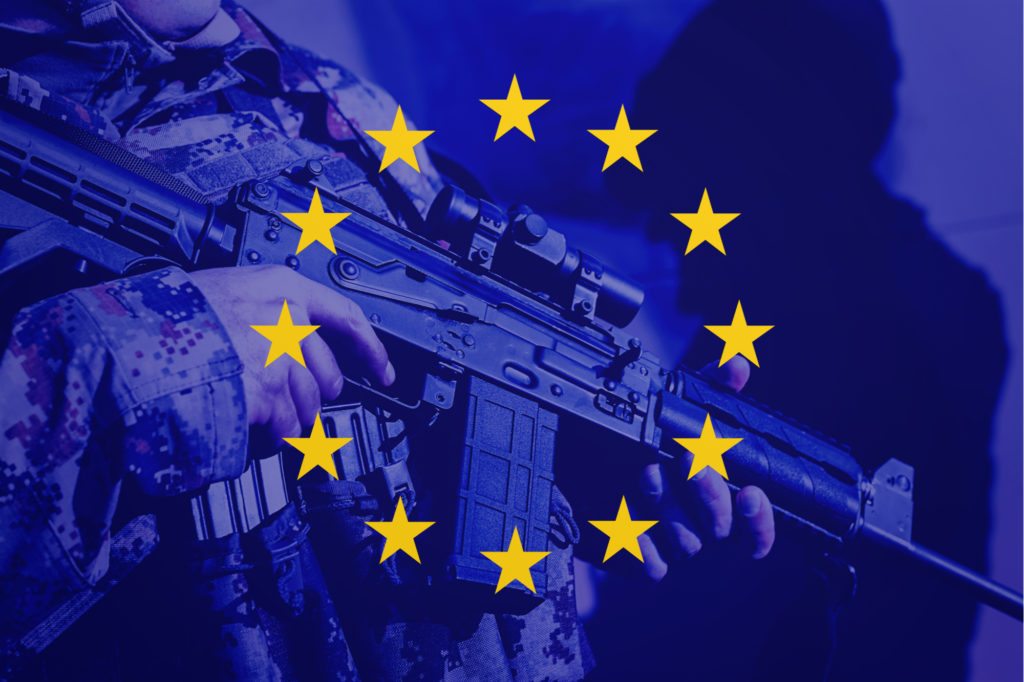
Historical cycles and recurring patterns: Europe the victim of collective hysteria, as in the First World War
As in 1914, today we are witnessing a process of collective self-destruction, in which entire governments let themselves be swept along by a logic of war inevitability.
By Valerio Giunta, CEO of Startup Italia and Founder of Banking People
There is a Latin saying that perfectly captures today’s geopolitical situation: "Quos vult Iupiter perdere, dementat prius" (Jupiter first deprives of reason those he wishes to ruin). The ancient Romans used this motto when they saw someone embark on dangerous ventures that would surely lead to ruin, both for themselves and for others. In this sense, History is full of examples in which the inexplicable madness of a few brought ruin and devastation to millions of families.
In 1914, for example, Europe threw itself with fervent enthusiasm into the most devastating war in its history, held captive by a war-mongering narrative that no one seemed able to counter. Today, with disconcerting speed, we are seeing a similar convergence of political, economic and military interests, whose aim appears to be the militarization of Europe as a tool of long-term strategic pressure. It is therefore impossible not to focus on the similarities between 1914 and the present. Indeed, before 1914, Europe was split into two major alliances (the Triple Entente vs. the Triple Alliance); today, as then, the world is divided into opposing blocs (USA vs. Europe vs. Russia) that, rather than confronting one another directly, are measured out through proxy conflicts in Ukraine, Taiwan and the Middle East (Syria and Palestine above all).
Likewise, exactly as in 1914, we are witnessing an arms race, rising military spending, the development of new weapons and the rearmament of countries that have been peaceful for the past 80 years after having been responsible for world wars that went down in History (Germany and Japan). We are also seeing the return of aggressive nationalism, marked by increasingly strident patriotic rhetoric, disinformation, fake news and internal divisions that recall the war propaganda of the early 1900s. In addition, Russia and China are laying claim to territories, the West appears increasingly divided, and economic crises and rampant protectionism are creating inflation, social tensions (social disparities, social and trade-union movements), trade wars and broken supply chains, all strikingly similar to the instability seen before 1914.
On the eve of the First World War, public debate was steeped in nationalism and patriotic rhetoric. Newspapers fuelled the myth of a short and glorious war, arms industrialists saw unprecedented profits, and politicians rode a wave of collective hysteria, convinced that conflict would consolidate their power. The great powers, aware of the fragility of their economic and social balance, believed that a war could solve internal tensions and restore a new world order. Few, however, considered the massacre that would follow. Critical voices went unheard (Bertrand Russell, Romain Rolland, Rosa Luxemburg, Lev Tolstoy, Albert Einstein): the interests of the moment simply were moving in another direction, and the world of communications is funded by them.
In 2025, History seems to be repeating itself. Indeed, today we are witnessing an alarmingly similar dynamic, with Ursula von der Leyen announcing the ReArm Europe fund worth 800 billion, financed through debt in derogation of budgetary constraints, and the major arms industries - Rheinmetall, Leonardo, Thales, BAE Systems - celebrating as their shares soar. The speed at which all this has happened recalls the unstoppable mechanism of the mobilisations of 1914. In just a few months, we have gone from the Green Deal to the New War Deal (but what happened to the climate crisis, the unstoppable rise in sea levels, and so on?). If the strategy was once to focus on renewables and the ecological transition, Europe is now preparing to invest billions in rearmament. A total paradigm shift, imposed abruptly and without any real debate.
A Great Game between the USA, Europe, Russia and China
We find ourselves in the middle of a strategic war played out on several levels. First of all, if Trump reduces the US military presence in Europe and dismantles part of NATO, Europe is forced to defend itself alone. But there is more. For decades, the strategy towards Russia (and now China...) has always been the same: force it to spend on defence until internal collapse. It is the method that worked against the USSR during the Cold War. Now the idea is to repeat the script: force Moscow to commit enormous resources so as not to be crushed by European pressure (while Trump's America deals with China). Meanwhile, Ukraine seems to be heading for an exit from the stage. There is talk of elections, of a conflict that will be "frozen", of talks already under way between the USA and Russia. The great game continues, and those who will pay the price will always be the same: European citizens, who will see debt rise, military spending increase and, in due course, welfare cutbacks.
Debt, Markets and the Old Trap
The mechanism is simple and time-tested: first new debt is created to finance rearmament, the markets gorge themselves, and military companies thrive. Then, when the time is right, the rating agencies (owned by the same investment funds) will downgrade European debt, imposing cuts and privatisations. We saw it with the 2008 crisis, with the sovereign debt crisis, and we will see it again. Now, with Trump in the White House, the scenario seems to be speeding up. If, as announced, the US president reduces the United States' military commitment in Europe, the governments of the continent will be forced to raise defence spending dramatically (under the feared threat of a Russian invasion). The markets have already smelled the opportunity: multi-billion-euro loans, bond issues, mergers between industrial giants and new military supply contracts.
Meanwhile, war propaganda is advancing. Anyone who dares question the need for European rearmament is branded a Putin apologist, just as in 1914 those who opposed the war were seen as traitors to the homeland. Collective hysteria is growing, fuelled by simplistic narratives and empty slogans. But what will happen when, after years of unsustainable military spending, Europe’s public finances blow up? The solutions will be the same as always: welfare cuts, forced privatisations, austerity. The population will be left to foot the bill, while the profits of the defence industries and hedge funds will already have been pocketed.
And then there is the Chinese question. Trump has always seen Beijing as the main strategic enemy, and his economic policy will be even more aggressive than during his first term. If the United States intensifies sanctions and pressure on Taiwan, China could respond with more decisive actions in the Pacific, opening another front of global tension. Meanwhile, the mingstream press is warning of the threat from Russia taking advantage of the American withdrawal from Europe to consolidate its positions in Ukraine and the former Soviet countries. This could lead either to peace negotiations more favourable to Russia, or to new military offensives, depending on how events unfold in the coming months. In the end, that war serves the USA to make Europe buy its very expensive gas (and weapons) and to weaken an ally that is no longer strategic...
And so we return to where we began. As in 1914, today we are witnessing a process of collective self-destruction, in which entire governments let themselves be drawn into a logic of war inevitability. Back then, people believed the war would be short and glorious; today, we are told that Europe must prepare for a long confrontation with Russia. But history teaches that such strategies come at a price. The First World War did not last a few months, but four years of horror and destruction, bringing four empires to collapse and paving the way for totalitarianism. Today, Europe risks falling into a similar spiral, without any real plan for the future. With Trump in the presidency, the game has changed: Europe risks being caught in a financial trap and a geopolitical one that will make it even more vulnerable. This is the price of the myopia of those who founded a European Union without legs, focusing everything on simple monetary union. It is the failure of the predatory vision of the so-called frugal countries (Germany, the Netherlands, Belgium and Denmark, with France lending support), good at impoverishing Southern Europe but incapable of facing extra-continental dangers that, as early as the late 1990s, were not hard to foresee.
Tags
Related articles

Newsletter
The Patrimoni & Finanza newsletter
A considered selection of analysis on economy, Real Estate and wealth
The subscription service is not connected yet: no address is stored