
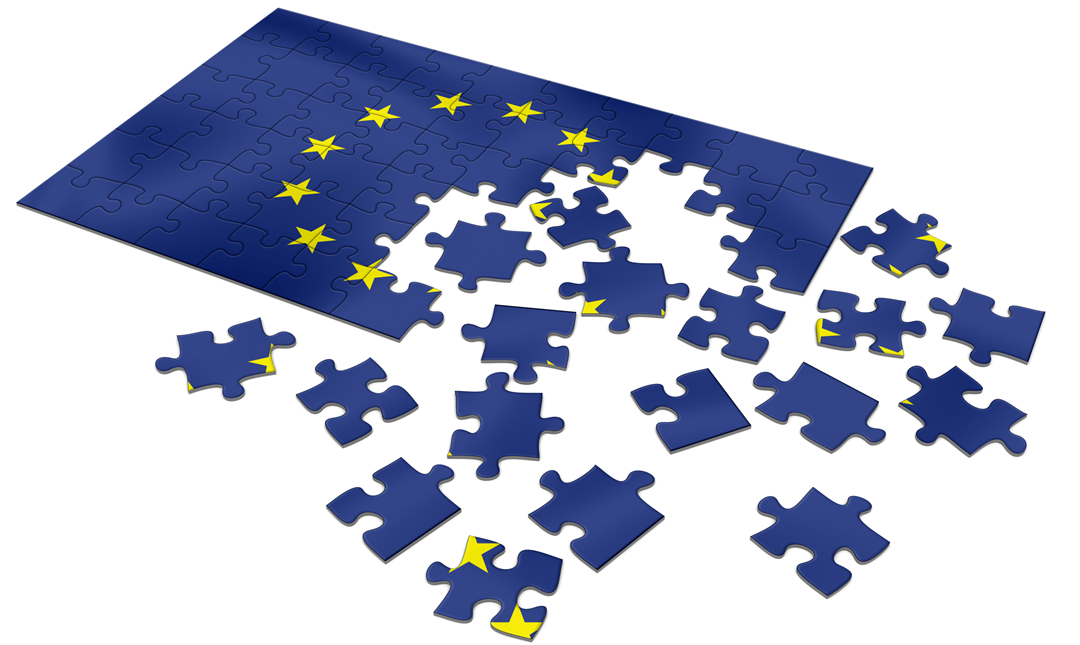
The “European Question”, Part I: Rearmament Is Not Enough, Without Further Steps the EU Will Not Go Far
In practical terms, what steps should the European Union take to achieve true integration among peoples? The answer is: many things, beyond weapons. Here they are.
By Alessio Cardinale, Founder and CEO of Patrimoni&Finanza
A few weeks ago, many of you will remember the very direct and forceful speech by Mario Draghi before the European Parliament. The former prime minister took a whole boxful of stones out of his shoes—he had had them there for quite some time—and pointed the finger at the European institutions with a blunt “…You say no to common debt, you say no to the single market, you say no to the creation of the capital markets union. You cannot say no to everything. Otherwise, you must also admit that you are unable to uphold the fundamental values for which this Union was created. So when you ask me 'what is the best thing to do now', I tell you that I have no idea. But do something!". After all, it is clear that the role of supporting actor of the European Union in the peace negotiations between Russia, the United States and Ukraine is the result of the failure of a union based solely on the use of a common currency, and not on a genuine social and economic union of peoples.
The issue, framed this way, touches on a broader one: the political fragility of the EU compared with its economic strength. It is true, in fact, that the EU was born mainly as an economic and monetary union, without ever completing a real political and military integration. This makes it less effective at making united decisions on geopolitical issues, especially when member states have divergent interests. In the case of the war in Ukraine, Europe has shown strong solidarity with Kyiv, but it does not have a sufficiently incisive common foreign policy to be a leading player in the negotiations. However, more than a "failure" of the EU, this fragility is also a reflection of the global balance of power. The war in Ukraine is seen by many as an indirect confrontation between Russia and the United States, so Washington has taken a pre-eminent role in the negotiations. The lack of a common European army and military dependence on NATO reinforce, more than ever today, this dynamic.
But in practical terms, what steps should the European Union take to achieve true integration among peoples? The answer is: many things, and they require a non-dichotomous vision of the Union. To achieve genuine integration among peoples, in fact, the European Union should finally think like a “federation” and take concrete steps in at least five key areas: political, economic, social, military and cultural. As for the first, the EU should create a European federal government with a president elected directly by the citizens. Today the European Commission is a bureaucratic body, with little popular legitimacy, and is poorly regarded by most Europeans. Moreover, it should overcome the veto power of individual member states in foreign and defence policy, to ensure swift and effective decisions.
From an economic and fiscal perspective, a larger common budget should be adopted, funded by European taxes (for example, a tax on multinationals) to reduce inequalities among member states, and a common industrial policy should be created to make the EU more independent from the United States and China in strategic sectors such as energy, technology and defence. In addition, tax systems should be harmonised to avoid unfair competition between countries (for instance, the tax dumping of Ireland and Luxembourg).
But none of this would be enough without social unity and rights. That means adopting a European minimum wage and a common welfare system to guarantee similar living standards for all citizens; strengthening mobility and exchange programmes (such as Erasmus) for workers as well as students; and ensuring greater protection of civil rights and common migration policies to avoid internal divisions. From the standpoint of common defence, a European army independent of NATO should be created (something Trump himself would welcome), capable of ensuring security without depending on the USA. Likewise, a single, unified foreign policy, to give Europe greater weight in international negotiations, and a plan for energy security and reducing dependence on external players such as the USA (for gas), Russia and China. Finally, greater teaching of European history in schools to strengthen a shared identity, promoting the widespread use of a common European language (English, in practice, already is one) without diminishing national languages.
If the EU does not take these steps, it will remain a fragile confederation dominated by national interests. In fact, the EU has often shown a bureaucratic face, distant from citizens and too heavily conditioned by the interests of the stronger member states, such as Germany and France. The economic inequalities between North and South, East and West Europe are proof of this: the Greek debt crisis, the management of cohesion funds and austerity policies have widened these gaps rather than reducing them. One of the main problems is that the European institutions do not have real democratic legitimacy. The European Parliament has limited powers compared with the Commission and the Council, and crucial decisions are often taken behind closed doors by unelected technocrats.
In practice, the current structure of the European Union seems almost designed to preserve divisions among member states rather than overcome them. It is as if it had been built to be a half-finished union: strong enough to manage a common market, but too weak to be an independent political actor. The EU has imposed rigid economic rules (see the Stability Pact and austerity policies) that have created discontent in several countries, fuelling anti-European sentiment. It has not promoted a common cultural identity with equal force, leaving citizens to see Brussels more as an “administrator of rules” than as a shared political project. It has allowed the major European powers (such as Germany and France) to set the line, creating imbalances between stronger countries and weaker ones, without any real solidarity mechanism. The result? Citizens feel first Italian, French, German, Polish... and only then European, because the EU has not given them a strong enough reason to feel part of a single community.
To truly change, a new ruling class would be needed, less tied to the bureaucratic apparatus and more representative of the popular will. But this raises another question: how can a system be reformed from within if those who run it have no interest in changing it? The only real push for change could come from greater popular and political pressure, with a more aware and active public opinion calling for greater transparency and concrete reforms, and with European political movements that are not just national ones disguised as pro-European, but that put forward a genuine federal vision. In addition, with more referendums and direct-democracy tools at European level to make the citizens’ will count more.
Related articles

Newsletter
The Patrimoni & Finanza newsletter
A considered selection of analysis on economy, Real Estate and wealth
The subscription service is not connected yet: no address is stored