

Real Estate Market: young people are buying and older people are selling. What will 2025 bring?
Demographic decline will shape the Italian real estate scenario in the years ahead, as a shrinking young population translates into a smaller pool of potential buyers.
2025 looks set to be a year of consolidation for the real estate market, supported by falling mortgage interest rates and new housing trends. According to the latest analyses carried out by industry experts and real estate observers operating in Italy, the sector will continue to grow, albeit with dynamics that vary according to both location and property type.
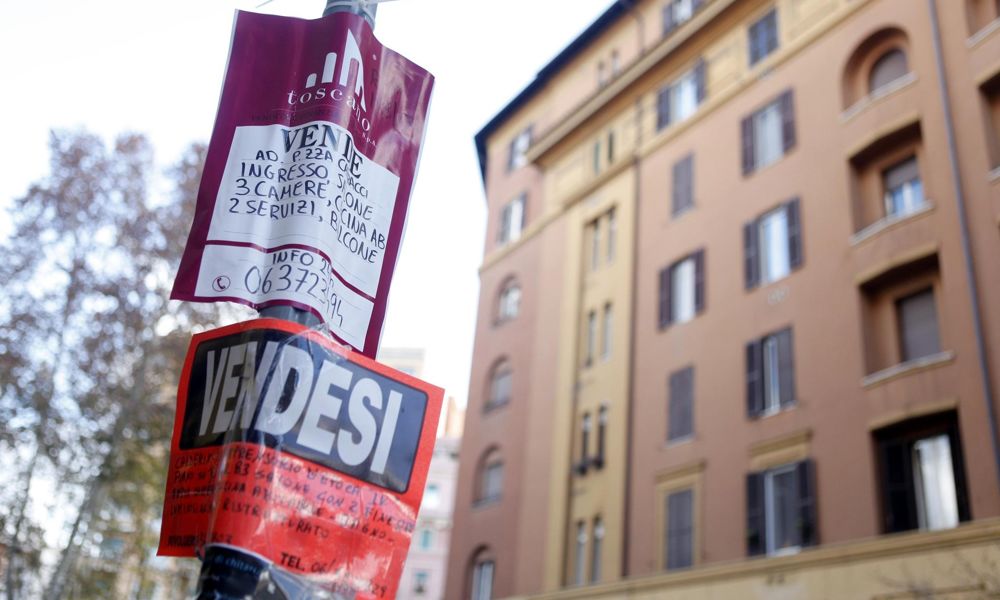
After a 2023 marked by a negative trend, the Italian real estate market closed 2024 with signs of recovery, albeit amid considerable uncertainty. In fact, the fall in inflation and the lower cost of money have certainly brought relief to the mortgage sector and encouraged interest from buyers and investors. According to a survey conducted by the Centro Studi of Euromq.it, in 2024 58% of property transactions involved the purchase of a first home, signalling that strong housing demand remains. Indeed, while young people are increasingly inclined to look for and buy their first home, the market trend at national level shows that 42% of sales also involved the purchase of second homes, demonstrating that the sector continues to be a benchmark for investments, especially in a recovering economic environment. On the sellers’ side, meanwhile, 17.3% sold their primary home, while a full 82.8% sold a second residence, highlighting the importance of liquidity and the rationalisation of real estate assets. Another important factor to consider on the sellers’ side is the tax pressure on unoccupied properties and the related management costs, which have led several second-home owners to sell because maintaining one or more homes in addition to their main residence has become unsustainable.

Overall, the average age of buyers fell sharply during 2024, settling at 38. This confirms that the buyer base is tending towards that segment of the population that in some way wants to “put down roots” in a specific place, but above all to escape the high cost of renting, which mainly affects cities such as Milan, Rome and Florence. 31% of buyers are between 18 and 25 years old, while 24% are between 36 and 45. What, then, is the profile of sellers? Unlike buyers, on the sellers’ side the age profile is higher. In fact, the average age is around 55, with a strong concentration in the 50-60 bracket. These figures confirm a well-established trend: young people buy, while later generations tend to sell. However, demographic decline in Italy will shape the Italian real estate landscape in the years ahead, as a reduction in the young population translates into a smaller pool of potential buyers and, at the same time, a growth in the number of those who will want to sell their property inheritance.

Which properties are most in demand? Most buyers are young, and this is partly driving a paradigm shift both in the search for properties and in the types of homes that are most sought after. Across the country, the Italian housing stock is currently marked above all by significant obsolescence, both in terms of structure and, especially, energy efficiency. In addition, there is an ongoing demographic change, an increase in remote working, and greater attention to sustainability and the optimal use of space. In short, homes that allow for the creation of open space and that can undergo energy upgrading to reduce consumption and save money are increasingly preferred.

In 2024 this trend was confirmed, with demand for three-room apartments rising to account for 28.2% of transactions. Three-room apartments, in fact, remain one of the best housing solutions, both for their comfortable but not excessive size and for layouts that often make it possible, during renovation, to create large open space areas that give a greater sense of comfort, especially for young buyers. In second place are four-room apartments, which remain among the favourites of families with one or more children because of how the rooms are laid out. Finally, two-room apartments maintained in 2024 the same market share as the previous year, at 19.7%.
S&P’s latest report shows that in 2024 nominal house prices recorded significant growth, prompting analysts to revise their forecasts upwards for the 2025-2027 period, with average annual property price growth estimated at around 3%. As for the Italian real estate market, Tecnocasa’s analysis predicts that in 2025 the number of property sales should range between 710,000 and 720,000 transactions, confirming the volumes recorded in 2024. As for prices, moderate growth is expected, between 0% and +2%, with a clear distinction between prime properties, which are set to maintain or increase their value, and properties that require renovation, whose value may instead remain stable or see slight declines.
Alongside the property sales sector, the rental market is also growing. More specifically, the rental market will continue to see an increase in rents of between +4% and +6%, especially in major urban centres and leading tourist destinations. Rising demand, combined with a lack of supply, will help support prices, with increasing attention paid to property quality and the services offered. Finally, the luxury real estate sector is also confirming its growth, with different trends at global level. Milan leads the Italian market with an expected increase of 3.5%, while in Europe the city with the strongest growth will be Stockholm, with an estimated rise of 6%. Internationally, Dubai continues to be one of the most attractive destinations for investors in the luxury segment, with growth forecast at 5%.

As for property prices, a slight increase is expected in 2025, in line with the trends seen during 2024. In Italy, on a national basis, property prices will see slight growth, with price changes ranging from around 0% to 2%. Homes that do not meet the quality standards required by buyers, especially those needing extensive work for both structural and energy upgrading, will continue to lose value during 2025. By contrast, prices will rise mainly for prestigious properties, new-build homes and those that are in excellent condition or at least in “good” condition and do not require major work.
Tags
Related articles


Newsletter
The Patrimoni & Finanza newsletter
A considered selection of analysis on economy, Real Estate and wealth
The subscription service is not connected yet: no address is stored