
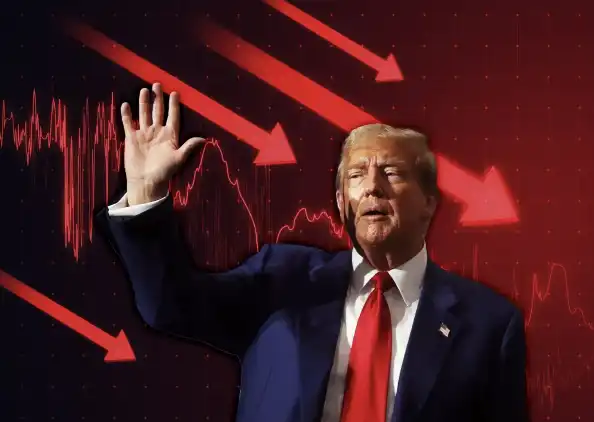
Tariffs, a failed shortcut. Bringing manufacturing production back to the West is pure illusion
In a context of deep crisis in the West, Trump’s answers appear inadequate and illusory. Among them are the return to customs barriers or the forced relocation of production.
By Valerio Giunta, CEO of Startup Italia and Founder of Banking People
In a context of deep, widespread crisis in the West, Trump’s responses appear inadequate and illusory. Much is said about bringing factories back home to protect jobs, but little is said about the fact that in the United States many companies that have carried out reshoring cannot find staff willing or prepared to work. So the issue is no longer “producing at home,” but identifying who will work in the factories, and with what work culture. Motivation, skills and above all meaning are lacking: bringing production back to the United States without regenerating the deeper meaning of work risks becoming a failed and illusory strategy.
Meanwhile, players such as the Chinese carmaker BYD are growing at astonishing speed. They not only dominate innovation in the electric sector, but are also so liquid and so well organised that they can afford to buy six container ships to export directly around the world. An industrial model that combines technical expertise, strategic vision and speed of action. But BYD is only the tip of the iceberg: its exponential growth is the symbol of a new global cultural and industrial competition, driven forcefully by the entire BRICS bloc.
China, in particular, has built a productive ecosystem founded not only on low costs and scale, but on a collective vision of work as the engine of national dignity and personal growth. Its universities, five-year plans, and public and private strategies all converge on a clear idea: innovate, produce, export. And when necessary, even buy up the routes of global trade, as shown by the direct purchase of entire shipping fleets by major industrial groups, and the strong presence in the Panama Canal. India, for its part, is rapidly emerging as a technological and demographic power, with millions of young people (many of them engineers) entering the labour market every year with advanced skills and a competitive spirit that stands in stark contrast to Western disengagement. In Russia, Brazil and South Africa – albeit in different contexts – the will to make industrial and strategic work a cornerstone of economic sovereignty is reasserting itself decisively.
The BRICS are building a new narrative of progress: less individualistic, more cohesive, centred on the value of production, community and autonomy. This is not only an economic challenge, but a cultural one. And if the West wants to respond, it must first of all recover a strong idea of work, growth and shared community. Protectionist barriers, the wars designed at a drawing board for control of trade routes (what other interest lies behind the US interest in Greenland, the Panama Canal and the war with the Houthis in the Red Sea?), in the face of such organisational capacity and long-term vision, look like attempts to slow the inevitable without addressing the deep cause of the crisis.
The real question is: what does the West lack in order to become competitive again? As Pope Francis said in Florence in 2015, "we are not living through an era of change, but a change of era". We can feel it in the disorientation of our societies, in the cultural chaos running through Western nations, in the end of many certainties of the past. It is confirmed, each in their own way, by three figures who reflected deeply on the historical and political dynamics of civilisations: Arnold Toynbee, Oswald Spengler and Ray Dalio. Toynbee showed us that civilisations do not collapse because of external causes, but because of an inner failure of elites who stop responding creatively to challenges. Spengler spoke of the "decline of the West" as a spiritual and cultural exhaustion, where new political forms – such as democracy and socialism – risk dissolving the traditional order without replacing it with a new foundation. Ray Dalio, with his studies of the great historical cycles, describes the West today as being at the end of a macrocycle, marked by systemic crises and growing instability.
Even the Vice President of the United States J.D. Vance, in his speech at the Munich Conference last February, stressed a crucial point: the real threat to the West does not come from outside, but from an internal drifting away from its founding values. It is not China or Russia that threaten our prosperity, but our inability to regenerate the spirit that made it possible over the course of centuries.
Going (far) back in time, it is possible to find similarities. For example, at the moment when the Roman Empire reached its deepest crisis, two voices – one historical and one theological – were able to read its underlying causes with a lucidity that still speaks to us today. Ammianus Marcellinus, one of the last great historians of Rome, describes in his Res Gestae a now decadent aristocratic society. He denounces rampant corruption, excessive luxury, and the indifference of the Roman elites to the actual fate of the Empire, which in the meantime was being defended mainly by men and commanders from the provinces. His severe, realistic analysis captures the loss of civic sense, of public responsibility and of the bond with the founding values of Rome. Augustine of Hippo, writing De Civitate Dei in the aftermath of the sack of Rome (410 AD), offers an even more radical reading: the crisis is not only political or military, but spiritual. Imperial greatness crumbles because it rests on an earthly City that has lost any sense of the divine, justice and truth. Augustine contrasts the city of men – subject to vanity, ambition and violence – with the City of God, a community founded on faith and the common good.
Returning to the present, in the historical model outlined by Ray Dalio civilisations pass through six main phases. Today we are probably in the sixth phase, the one in which the dominant hegemony crumbles under the weight of debt, internal fragmentation and loss of collective trust. A phase marked by conflict, instability and systemic uncertainty. Institutions lose credibility, polarisation grows and the risk of internal confrontation increases. Dalio does not offer easy solutions, but a guiding principle: recognise the signals of decline in order to anticipate and steer a possible regeneration. It will not be technology or politics alone that saves Western democracies, but a return to deep, shared and lived values.
At this crossroads, the West has two roads ahead of it: let this cycle end in collapse – cultural, followed by economic – or attempt a deep reconstruction starting from the meaning of work, from communities, from the person. In this second direction moves, with concreteness and vision, the experience proposed by the CDO in the Manifesto of Good Work: "it is necessary to offer employees an answer to the meaning of work that goes beyond pay and productive function". Work, in fact, is not only a means of subsistence, but a fundamental dimension of personal fulfilment and of community building. The Manifesto clearly states that "good work arises from a culture that recognises the value of the person and translates it into organisational and relational practices". In this sense, "companies are called to build environments in which it is possible to experience meaning, responsibility and belonging".
The goal is ambitious but essential: to turn work into a place of human growth, where every collaborator can say: "Here I am building something of my own that matters." Not an easy path, but a possible one. A challenge that requires not heroic acts, but daily choices that are far-sighted and courageous.
In this sense, even investments, if they are to contribute to building the future, must know which side to stand on. A useful criterion for guidance is provided by ESG certifications (Environmental, Social, Governance). They do not assess only a company’s environmental sustainability or management efficiency, but offer a framework for checking how much it is truly investing in human capital, in the quality of internal relations, in social responsibility and in organisational transparency. Companies that embrace the values of good work – and combine them with a serious, documented ESG approach – represent the best possible destinations for responsible investments, capable of generating positive impact and value over time.
This is why the need for a new work culture returns so forcefully. A cultural response before an economic one: not a simple list of good practices, but a vision capable of putting the person, relationships, training, wellbeing and shared responsibility at the centre. We need to give meaning to effort, so as not to train people to avoid reality. We need to invest in the companies that are already following this path, often quietly but with determination. This is not only an ethical choice, but a long-term economic strategy. Because the future of the West also depends on the future of work. And the future of work is always built in the present.
Tags
Related articles


Newsletter
The Patrimoni & Finanza newsletter
A considered selection of analysis on economy, Real Estate and wealth
The subscription service is not connected yet: no address is stored