
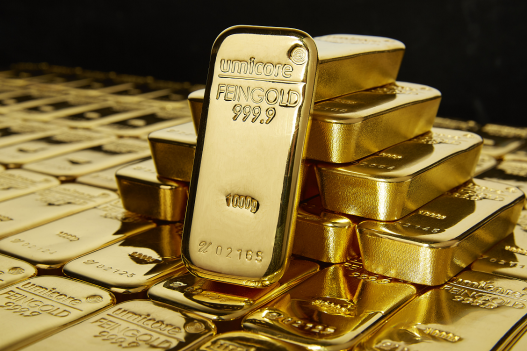
Gold in Correction: a Temporary Phase or a Shift in the Balance Between Fear and Confidence?
The recent decline in gold forces us to consider that even the ultimate safe haven can lose strength when the world that supported it stops doing so.
by Elena Raffone*
Gold is the ultimate safe haven, and in turbulent periods of economic or political crisis it attracts investors seeking protection. Unlike property investments — another safe haven, especially in periods of medium-high inflation — gold has the advantage of being immediately fungible, whether as investment gold (24 kt) or as “used” gold (18 kt or less). In the final stretch of 2025, after a long upward run that began in 2020, gold posted a sharp correction of about 10% in less than a week (from 120 to 107 euro per gram), before recovering to 111 (-7.5% from the highs). Let’s look at what this correction means and where it could lead.
On closer inspection, its rationale is not just one, but lies in a combination of overlapping factors. First of all, the US dollar strengthened. Since gold is priced in dollars, a stronger currency makes the metal more expensive for investors operating in other currencies, with the result of dampening international demand. At the same time, the perception of global risk has diminished: the market tension that in previous months had fuelled massive purchases of gold as a safe haven has begun to ease. Some signs of geopolitical détente and greater confidence in economic stability have led investors to move toward riskier assets with higher potential returns, such as equity markets.
Another decisive factor has been purely financial in nature: after the buying spree that drove gold to new highs, many investors began selling to lock in profits. It is the classic phenomenon of profit taking, inevitable when an asset rises too quickly. Some analysts have spoken of excess speculation that had inflated expectations beyond reason. In addition, one must consider the growing interest in other securities offering more attractive yields, such as government bonds, and this has made gold less appealing.
The complexity of the picture has been further amplified by the sharp slowdown in demand from major institutional players. Some central banks, which in recent years had contributed significantly to the rise in the price of gold, have reduced their purchases, removing one of the market’s most decisive supports. Therefore, this may not be merely a technical adjustment, but a real change in stance and a reversal of trend. The fall in gold thus becomes a signal, almost a message: the balance between fear and confidence, between safety and risk, between preservation and ambition has changed. The decline in gold forces us to reconsider what, for decades, we have taken for granted as untouchable: even the ultimate safe haven can lose strength when the world that supported it stops doing so.
So what scenarios await gold now? In the immediate term, prices could remain unstable, because the market is redefining its own attitude toward risk. If the unsettled international climate returns to the stage, if inflation raises its head, if the greenback weakens again, gold could regain strength. But if stability were to prevail and real rates were to remain competitive, gold could stay under pressure. The truth is simple: gold’s decline is a reminder that no asset is truly invincible. Even the ultimate safe haven can lose ground when the world changes direction. And sometimes it is precisely in downturns that investors learn the most — not from the myth of safety, but from market reality.
* Intern at Skylife Management and student at John Cabot University for the Bachelor’s degree in business psychology
Related articles



Newsletter
The Patrimoni & Finanza newsletter
A considered selection of analysis on economy, Real Estate and wealth
The subscription service is not connected yet: no address is stored