
Energy shock and capital rotation: how resilient is your asset allocation?
Between inflation and geopolitics, the balance of power is being redrawn. A well-diversified portfolio helps preserve balance when the environment changes faster than our convictions.
by Vincenzo Lana, investor and economic-financial commentator
Until last week, the market backdrop was very different from today’s. We were seeing a fairly clear rotation both sectorally and geographically, from growth stocks to more cyclical names, and from the United States toward Europe and emerging markets. It was not a chaotic move, nor an escape from risk, but a gradual reallocation after years of heavy concentration in the U.S. market and in large technology companies.
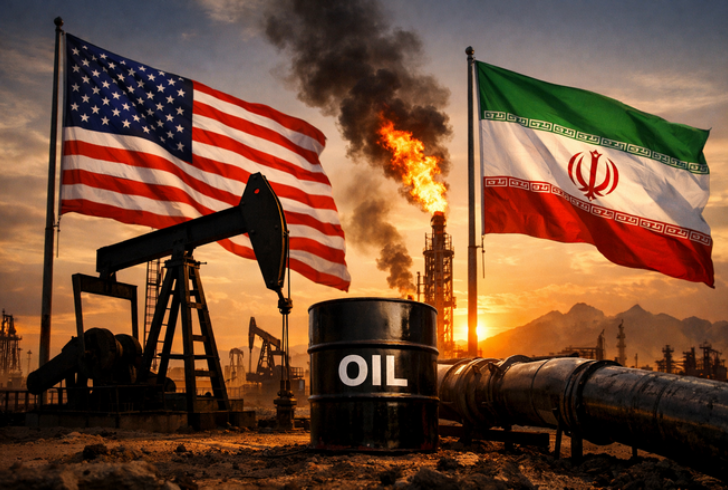
In that setting, U.S. valuations looked stretched, Europe seemed relatively cheaper, and emerging markets were beginning to benefit from a less dominant dollar and expectations of a cyclical recovery. Then, within a few days, the picture became more complicated. The attacks on Iran by the United States and Israel, the tensions in the Strait of Hormuz and, above all, the halt in LNG production at the Ras Laffan plant in Qatar brought back to the center of the debate a subject that is always sensitive for Europe: energy. Ras Laffan, in fact, accounts for about one-fifth of global liquefied natural gas supplies, and its interruption, even if temporary, is no minor detail. The TTF, the European gas index, quickly surged higher, while Brent crude moved above the $100-per-barrel threshold.
For an investor with a diversified portfolio, this is not just a technical move in commodities, but a factor that can affect corporate margins, consumption, economic growth, monetary policy and currencies. Meanwhile, inflation in the eurozone showed signs of re-accelerating even before the outbreak of the conflict, with a preliminary February reading of 1.9% year on year versus 1.7% in January, above expectations, and core inflation rising to 2.4%. We are not facing an out-of-control dynamic, but the
movement is in the opposite direction from what many were hoping for in a swift cycle of rate cuts by the ECB, which at its March 19 meeting confirmed expectations of unchanged rates. The issue, however, is not the single meeting, but the path over the next few quarters: if energy were to stabilize, the inflationary impact could remain limited; if, instead, geopolitical tension were to persist, the central bank would truly find itself walking a tightrope between supporting growth and the risk of rekindling price pressures.
The euro weakened from 1.18 to 1.15 against the dollar, a sign of a greater risk perception in Europe, while gold, after an initial boost, gave back some of its gains, suggesting that the market is not yet pricing in a scenario of structural, prolonged crisis like the one that followed Russia’s invasion of Ukraine. For the medium- to long-term investor, the question is not whether the market will fall further in the coming days, but whether we are facing a temporary shock or a regime change. Over the medium term, three possible paths can be envisaged. The first is one in which tensions ease, Qatari production quickly resumes and energy prices stabilize, turning current volatility into a contained episode; the second sees gas and oil remain elevated for several quarters, inflation stops falling but does not accelerate dramatically, and the ECB delays any cuts while keeping a wait-and-see stance; the third is more complex, with energy prices staying high for a long time, growth slowing and a mild form of stagflation taking shape, a more problematic scenario for European equities. We do not know which of these scenarios will prevail, but it is not an investor’s job to predict it precisely; rather, it is to build a portfolio able to move through all three.
In the long term, the ability of economies to adapt to energy shocks, the transition toward alternative sources and technological innovation remain central. Wars end, geopolitical tensions change shape, but the big structural trends continue to work beneath the surface. In this context, a few diversification ideas may be worth reflecting on: maintaining genuine diversification geographically and not just in name, balancing cyclical and defensive sectors, considering the role of currencies in the overall exposure, integrating assets that react differently to inflation, and avoiding excessive concentration in a few mega-caps after years of outperformance.
This is not about making drastic moves or chasing the theme of the moment, but about questioning the overall resilience of one’s asset allocation, remembering that volatility is not an anomaly of the system, but an integral part of how markets function. A well-diversified portfolio is not meant to eliminate short-term losses, but to make the journey sustainable over the long run. Today the noise is louder, the variables at play have multiplied and uncertainty has returned, but it is precisely in moments like these that the difference between reacting emotionally and remaining faithful to a strategy built over time becomes clear. The medium term will probably be more unstable than was hoped just a few days ago; the long term will continue to reward the ability to adapt more than the ability to predict. And perhaps the real challenge is not guessing where Brent will go or what the ECB will do, but maintaining balance when the context changes faster than our convictions.
Tags
Related articles



Newsletter
The Patrimoni & Finanza newsletter
A considered selection of analysis on economy, Real Estate and wealth
The subscription service is not connected yet: no address is stored