

Dedollarisation, oil and conflicts: who will pay the price of the new world order?
The search for alternatives to the dollar affects the financial power of the United States and the balance of international trade. For Europe and Italy, the crucial issue is how to deal with a transition that may increase costs, risks and dependencies.
Behind the dollar there is much more than a currency
Reading international tensions solely through military operations, government statements and territorial disputes means overlooking an important part of the contest: who finances world trade, through which channels payments are settled and in what assets states keep their savings. The dollar holds a central position in this system and gives the United States an advantage that no other power enjoys to the same extent. For this reason, dedollarisation, even when it concerns only a limited share of trade, has a political significance that goes beyond the value of individual transactions: building alternatives means seeking greater autonomy from Washington and its decisions. It is on this ground that competition with China and with other BRICS countries takes on a structural dimension, one destined to outlast individual diplomatic crises.
A distinction, however, must be made between the direction of change and its actual extent. The dollar remains dominant in financial markets: according to the Bank for International Settlements, in April 2025 it appeared on one side of 89.2% of foreign exchange transactions. This percentage refers to transactions involving two currencies and should not be confused with the share of world trade paid in US currency. Even so, the figure shows just how deep its presence runs. Dedollarisation should therefore be understood as the development of alternatives and a reduction in certain dependencies, without assuming that a monetary order reversal has already taken place. A country can increase payments in its own currency and still continue to use the dollar to finance itself, invest or protect itself in a crisis.
Oil is a strategic passage, but it does not exhaust the issue
Oil is one of the most sensitive arenas in this transformation because it brings together producers, large importers, banks and governments. If an increasing share of energy trade is settled in currencies other than the dollar, the need to go through certain intermediaries is reduced and the autonomy of the parties involved may increase. However, quoting a cargo in one currency, paying for it in another and investing the proceeds in a third are different decisions. A producer may accept yuan and then buy assets denominated in dollars; or it may keep diversified reserves while continuing to use international oil prices as its benchmark. To understand how much the system is changing, one must therefore look at the entire financial chain, avoiding the temptation to treat a single transaction as proof of a revolution already completed.
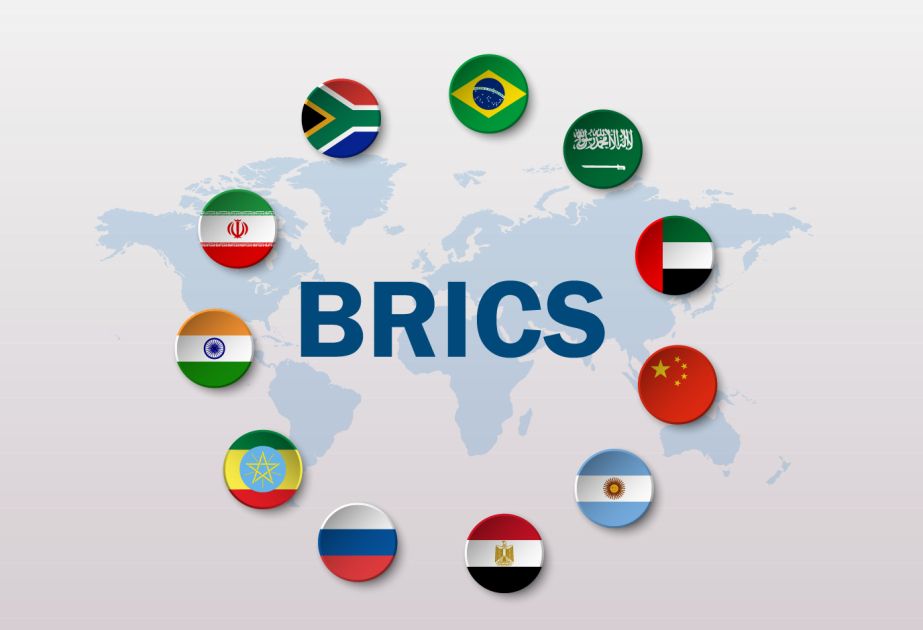
The BRICS project is moving forward precisely by building additional options: greater use of local currencies, cooperation on cross-border payments and diversification of funding sources. The declaration of the Rio summit in 2025 supports this path, but describes payment cooperation as voluntary and non-binding, in keeping with the conditions of each country. We are therefore not looking at a single common currency already in operation, nor at a group with perfectly aligned interests. China, India, Brazil and the other participants may share the goal of reducing certain dependencies while maintaining different economic strategies and international relationships. The strength of dedollarisation may lie precisely in this gradualism: making recourse to a single system less obligatory, without having to replace it in full.
American privilege has a concrete economic value
The international position of the dollar helps sustain demand for American financial assets and makes it easier for the United States to finance itself. But the so-called monetary privilege does not depend only on oil: market depth, the liquidity of Treasury securities and the ability to deploy very large amounts of capital quickly also matter. The Federal Reserve noted that in the first quarter of 2025 foreign investors held about 32% of marketable Treasury securities; the remainder was held by domestic private investors and by the central bank itself. American financing therefore rests on a complex base. Lower international demand could make it more costly, but would not automatically mean the disappearance of buyers or the impossibility of refinancing the debt.
This is where the political stakes of dedollarisation emerge: a lasting reduction in financial advantage could force the United States to show greater fiscal discipline, accept higher interest rates or make tougher distributive choices. But speaking of an unlimited power to print money would be misleading, because even the issuer of the dominant currency must contend with inflation, investor confidence and debt sustainability. The issue is rather the margin of freedom Washington enjoys compared with other countries. If that margin were to shrink, defending the existing system would become even more important. This makes an economic reading of American firmness plausible, but it is not enough, on its own, to prove that every military decision was taken to defend the dollar.
Trump, the Gulf and the risk of a counterproductive backlash
The persistence of the crisis in the Gulf shows how difficult it is to separate security, energy and economic power. In early October 2026, the dispute over navigation in the Strait of Hormuz and the disagreements over the conditions needed to break the deadlock between Washington and Tehran remain open. The issue concerns both the immediate risks to trade and the possibility of tying access to energy routes to political and military decisions. For importers, uncertainty can weigh on costs even when part of the supply continues to reach its destination: insurance, procurement planning and delivery reliability all become part of industrial costs. The centrality of the Gulf therefore stems from its ability to transmit a regional crisis to economies far removed from the theatre of hostilities.
Trump’s conduct can also be interpreted as a desire to preserve America’s ability to influence these balances. The administration’s official motives, however, include Iran’s nuclear programme and the security of navigation: reducing them exclusively to monetary defence would mean turning one interpretative key into a universal explanation. On the analytical level, one possible counterproductive effect remains: the more a country perceives payments, reserves and supplies as vulnerable to pressure from another power, the stronger the incentive may become to build alternatives. Coercion may achieve immediate results while at the same time encouraging, in the long run, precisely the search for autonomy it seeks to contain. This is not an inevitable outcome, but it is a risk worth noting.
Ukraine and the limits of a single explanation
The war in Ukraine has also taken on an international economic dimension through sanctions, trade reallocation and strategic confrontation. Its origin, however, remains the Russian invasion, while Western support for Kyiv does not amount, formally speaking, to a declared war between NATO and Russia. In 2022 there were indeed negotiations and draft exchanges, but substantial differences remained over security guarantees and limits on the Ukrainian armed forces. It is therefore not correct to present as already concluded a peace agreement later cancelled by the West in order to save the dollar. One can discuss missed diplomatic opportunities and the role of Western choices, while still preserving the distinction between negotiating documents, interpretations and established responsibilities.
The relationship between conflicts and dedollarisation may also work in both directions. The search for financial autonomy fuels competition between powers; wars and sanctions can in turn make that search more urgent. In this perspective, monetary fragmentation is both a component of the struggle and a possible consequence of it. It is a reading that allows events to be connected without erasing their differences: control of energy routes, territorial claims, state security and the financing of economies all influence one another. Attributing everything to a single cause would make the story simpler, but less useful in understanding what may happen next.
For Europe, the transition may be costly before it becomes beneficial
For Europe, a world in which more currencies are used in trade could create room for the euro, but initially entail greater complexity. Businesses may have to manage more exchange-rate risk, different banking relationships and additional costs to secure payments. On the energy side, paying for oil in a different currency does not eliminate the physical scarcity of supply or the premium required for an unsafe route. Even a possible weakening of the dollar would have mixed effects: it could ease some purchases denominated in US currency and, at the same time, hurt the competitiveness of European exporters. Dedollarisation therefore does not guarantee cheaper energy or stronger growth; the results depend on the stability of the new infrastructure and on the ability of economies to adapt.
Europe still has a concrete chance to strengthen its role. In June 2026, the ECB noted a moderate increase in the international use of the euro in 2025 and identified, among the conditions for consolidating it, more integrated markets and a greater supply of safe and liquid assets. The political challenge is to turn Europe’s economic size into financial and negotiating power. This requires reliable payment infrastructure, common funding instruments and an energy policy capable of reducing vulnerabilities. Without these elements, Europe risks bearing the costs of competition between the United States and China without gaining autonomy proportionate to its weight.
Italy must protect its ability to produce and trade
For Italy, the most significant consequences run through company balance sheets. Higher energy costs, less predictable transport or slower payments can squeeze margins and increase liquidity needs, especially for firms with less bargaining power. Financing Italian public debt remains tied mainly to conditions in the euro area, the credibility of the public accounts and growth prospects: a crisis in the international monetary system could affect it, but not through an automatic link to the currency used for oil. The response should therefore focus on concrete vulnerabilities: diversifying supplies, improving energy efficiency, hedging exchange-rate risk and strengthening the financial resilience of businesses.
Dedollarisation also opens up possible trade opportunities, provided they are assessed in compliance with the applicable rules and sanctions. For Italy, maintaining diversified economic relations can mean expanding markets and reducing risky concentrations; but it requires expertise, reliable intermediaries and the ability to distinguish an opportunity from a new dependency. The most likely change may be a more articulated monetary order, in which the dollar retains a central role but faces alternatives in some trades and financial circuits. Those who can manage this complexity may gain room for manoeuvre. Those who wait until the new balance has already been defined risk arriving after having paid much of the cost of the transition.
Tags
Related articles

Newsletter
The Patrimoni & Finanza newsletter
A considered selection of analysis on economy, Real Estate and wealth
The subscription service is not connected yet: no address is stored