

Two-speed real estate in Europe: which Southern properties are attracting Northern capital
Seafront villas, prestige residences and hotels tell part of the story of Spain, Italy and Greece’s strength. Ordinary home sales tell another. And when you look at individual sectors, the contrast with France and Germany shifts too
A villa on the Marbella coast, an apartment in a Roman palazzo and a hotel in Milan can all attract international capital, but rarely for the same reason. In the first case, buyers are often purchasing a home to use for part of the year; in the second, they may be looking for a permanent residence in an urban setting; in the third, they are acquiring a property whose value also depends on the quality of its management. Geography brings these investments together. What separates them is the type of buyer, the intended use of the property and the way in which it is expected to create value.
To understand in what sense European real estate is moving at two speeds, it is necessary to distinguish home sales from investments in income-producing assets. According to Il Sole 24 Ore, Spain is drawing capital from Latin America, while among the sources of capital flowing into Italy are the Middle East, the United States and the United Kingdom. In Italy, interest is focused above all on hospitality and living: hotels and resorts on the one hand, student housing, rental homes and senior residences on the other. International demand for seafront villas and historic homes, by contrast, follows its own logic, and to understand how much weight it carries one must distinguish buyer enquiries from completed sales.
Spain: Costa del Sol villas draw attention, but deeds are slowing
In Marbella and Benahavís, the villa with a pool and outdoor space is one of the most recognisable products in the luxury segment. A sea view can make all the difference even when the property sits on the hills, far from the beach. Those looking for a second home care about privacy and how easily it can be managed from afar; those planning to move there place more weight on access to services and the possibility of living there all year round. These are two different demands, which can meet in the same property when the location works in both seasons.
A destination’s fame, however, is not enough to make every property sell. In the first six months of 2026, according to an analysis by DM Properties, 3,422 homes were sold in Marbella, Benahavís and Estepona, 20.7% fewer than in the same period of 2025. The figure refers to all homes sold in the three locations, not just luxury villas. At national level, the Colegio de Registradores recorded a 5.7% decline in transactions in the second quarter compared with the previous quarter. It is therefore possible to have a market capable of attracting international buyers and, at the same time, closing fewer sales.
This also helps explain which properties are more likely to stay on the market longer. A well-positioned villa, with work already completed and a price comparable to similar properties, presents fewer unknowns to the buyer. If, on the other hand, the property needs a major renovation and the asking price already includes the value it could have once the work is finished, the buyer takes on time and risk without receiving an adequate discount. That is where the selection is made, far more than on the simple label of “luxury villa”.
Italy: the seaside villa and the historic apartment answer different needs
Enquiries from foreign buyers show how proximity to the sea can change the budget. According to Gate-away.com data, between June and August 2026 the average value of homes sought by foreigners in Italy was about €428,000; for properties within one kilometre of the sea, it rose to around €637,000. These are the values of homes searched for on the portal, not closing prices. The same survey also shows that more affordable homes still attract the majority of requests. The sea raises the average value of the search, but from that it cannot be concluded that villas are the most sold homes. If anything, the only conclusion is that they are the most advertised.
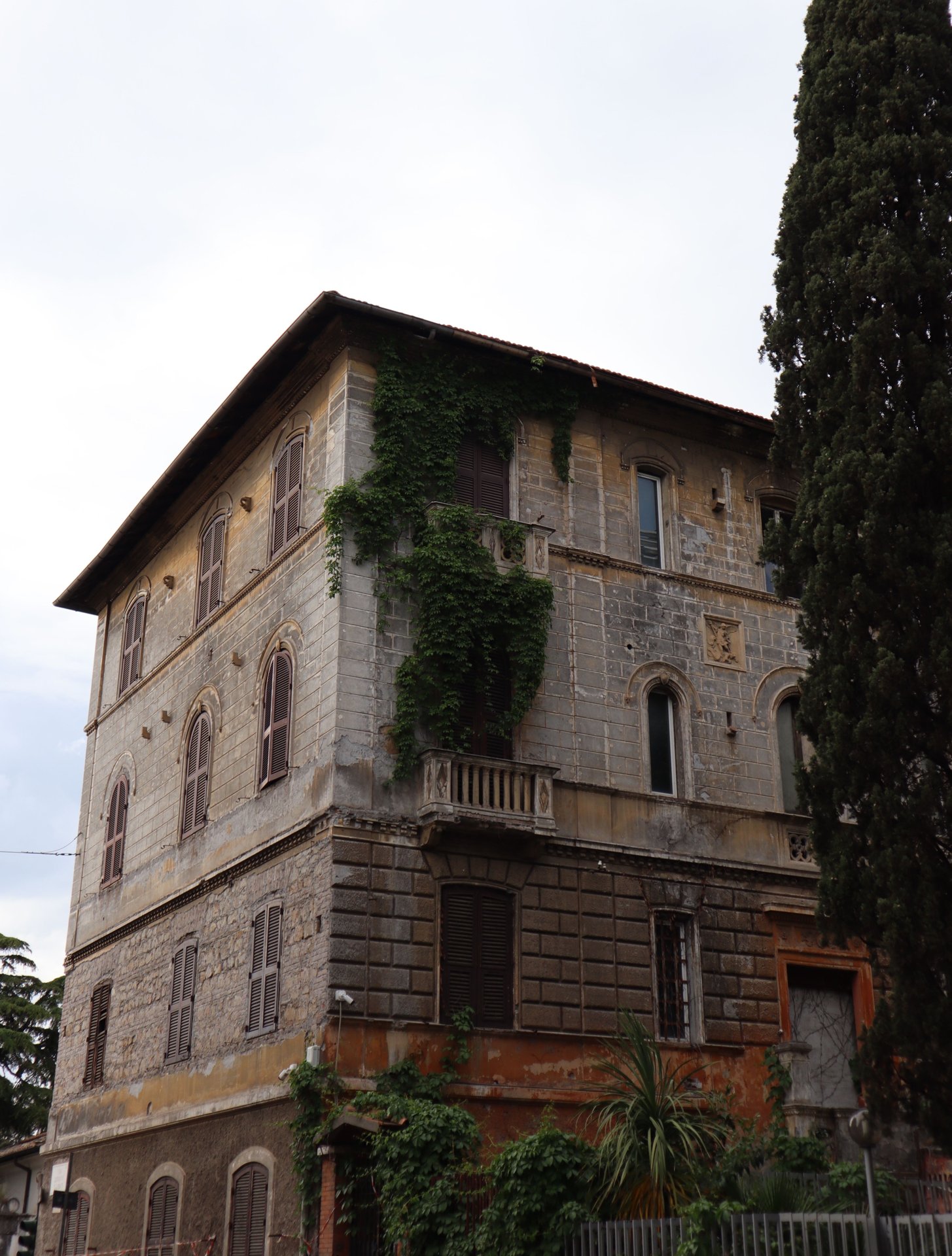
In art cities, the reasoning changes. An apartment in a historic palazzo can offer a central address, a layout and architectural features that are hard to replicate. Someone buying it to live in may accept a few compromises in order to have that location; someone assessing an entire building to turn it into residences or a hotel must instead check whether the project holds up after considering restrictions, permits, systems and renovation costs. For this reason, it is worth separating a prestigious apartment, a building to be redeveloped and a property already converted. Even when they stand on the same street, they have very different buyer pools and very different risks.
Foreign demand, moreover, does not coincide with luxury. Gate-away.com surveys also show interest in villages, rural areas and less well-known destinations. A farmhouse, a home in a smaller town or a coastal property outside the most expensive circuits can fit the search of someone with a budget below that needed for a villa in the best-known locations. Here the purchase price is only the first cost: accessibility, the condition of the property and the ability to look after maintenance may matter more than the square footage.
Greece: the villa on the islands and the house on the Athenian Riviera
Greece adds another distinction. In the Ionian Islands and the Cyclades, the seafront villa often answers the search for a home tied to a specific place, to be used for part of the year. On the Athenian Riviera, by contrast, there is also interest from buyers looking for a base for long stays or a permanent move, with connections and services available all year round. According to the operator’s data, the median budget for enquiries in the first half of 2026 rose from €2.3 million to €2.95 million. Over the same period, the median time between putting a property on the market and signing an agreement was 238 days. These are data from a specialist operator, but they illustrate a useful point: even where interest is growing, selling a high-end property can still take many months.
Hotels: four deals, four ways to invest
In the hotel market, the comparison between countries becomes more concrete, because individual transactions can be observed. Spain provides the example of portfolio resort acquisitions. In the first half of 2026, Calena Partners acquired three properties from Hotel Investment Partners for €200 million: two in Mallorca and one in Gran Canaria, for a total of 870 rooms. In the same half-year, Arcano Partners bought three hotels in Tenerife with more than 1,050 rooms in total. Buying several properties together makes it possible to enter the market at meaningful scale; however, when the hotels are concentrated in just a few destinations, the portfolio remains exposed to the conditions of those tourism markets.
Italy offers a different model. In Milan, Covivio Hotels announced a €217 million transaction for a portfolio of four four-star hotels, with about 900 rooms. These are renovated and leased properties, in well-served areas. The value of the transaction also lies in the possibility of investing in a city where business and leisure demand can support occupancy at different times. It is a useful case because it shows that international interest in Italian hospitality includes urban four-star hotels, as well as resorts and luxury addresses.
In Rome, by contrast, Rosewood Rome is an example of the conversion of a historic building. The project envisages 147 rooms and suites in the former headquarters of Banca Nazionale del Lavoro on Via Veneto, with wellness spaces also in the former vault. Here the commercial value of the project depends on how successfully it can make use of what is special about the building. A vault, a courtyard or a grand staircase can give the hotel a distinctive identity; at the same time, the original layout can make it more expensive to carve out rooms, run systems and organise service routes. In a deal like this, architectural quality has economic value to the extent that the project can turn it into an experience guests are willing to pay for.
In Greece, finally, Blackstone and Hotel Investment Partners acquired the Phaea Cretan Malia Park, a five-star resort on the northern coast of Crete. This is the case of an already operating beach resort. Compared with converting a palace, the key question changes: how much room is there to improve the revenues of the existing hotel, for example by extending the season or increasing guest spending during their stay? For those investing in a resort, the number of rooms explains only part of the price. The rest depends on how many nights can be sold, at what rate and with what costs.
What sells best in hotels? It depends how you count it
HVS data for the first half of 2026 make the difference between the number of properties sold and the value of transactions clear. In Europe, midscale hotels were the most numerous among those that changed hands, with 97 properties. The upper upscale segment, with 87 hotels, absorbed the largest share of capital: €4.3 billion, or 46% of volume. Luxury accounted for €2.4 billion across 34 hotels. In other words, luxury matters greatly in transaction values and in the headlines surrounding major deals, while the midscale segment weighs more heavily in the number of properties sold.
The same report also helps explain where the North–South reading holds and where it needs refinement. Spain accounted for 16% of the value of hotel transactions in Europe tracked by HVS; France was close behind, with 14%. In the same half-year, volume fell by 62% in Germany and 73% in Greece compared with a strong first half of 2025 for both countries. Paris therefore remains a significant hotel market even in a weaker picture for other French segments; in Greece, interest in villas and the completion of individual resort deals can coexist with a decline in the overall value of hotel transactions.
The test for Italy is to understand where the capital will end up
The ability to attract investment and the ability to offer affordable housing respond to different needs. A hotel can bring an existing building back into use and create economic activity without increasing the number of homes available. A student housing scheme, by contrast, adds beds, but its contribution to the city also depends on where it is located and how much a room costs. It is this distinction that should be used to measure the effects of Italy’s growth in hospitality and living.
The same applies to rental housing: capital can increase supply, but the contribution to the city is also measured by who can actually live in it. With a more expensive mortgage, a family that can sustain the same monthly payment has access to a smaller loan and may be forced to look for a smaller home or one farther away. That is why the successful sale of a resort, a seafront villa or a building to be converted can tell us a great deal about a territory’s ability to attract investment and very little about its ability to provide affordable homes.
The question for Italy, then, is which part of that international interest will be turned into projects that are missing today. In hospitality, that means distinguishing between buildings that can support a credible project and those whose charm risks making the costs look lower than they really are. In living, it means understanding whether new homes will reach those who today struggle to find a house, a room or a solution suited to old age. The greater speed of Southern Europe can be seen in the deals it manages to complete. The quality of that growth will be seen in what those deals leave behind on the ground.
Tags
Related articles


Newsletter
The Patrimoni & Finanza newsletter
A considered selection of analysis on economy, Real Estate and wealth
The subscription service is not connected yet: no address is stored