
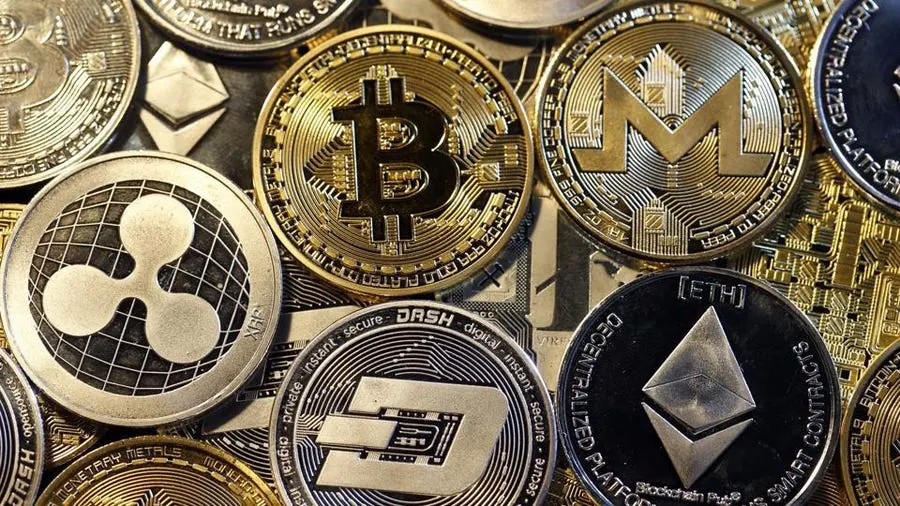
The future of Wealth Management is “hybrid”: client focus and diversification in crypto-assets
Blockchain technology and cryptocurrencies have already established themselves, but their reliability for long-term Wealth Management is still under observation. What will the future hold?
by Riccardo Zara*
Although the cryptocurrency market remains volatile, the evolution of the underlying blockchain infrastructure is opening up new ways to diversify, “tokenize” and automate wealth management.
What blockchain is and why it matters to Wealth Management. Blockchain is a distributed, immutable and transparent digital ledger. It is not controlled by a single entity, but shared among many participants (nodes). This makes it particularly well suited to operations where trust, traceability and security are essential, as in the case of wealth management. In recent years, many operators have been exploring how to use blockchain to digitize real assets (e.g. property, works of art, funds), automate transactions through Smart Contracts and provide more “democratic” access to financial tools that were once reserved for a few.
One of the most interesting developments is so-called tokenization, or how to fragment luxury and open it up to everyone. Simply put, to “tokenize” means to digitally represent a traditional asset (such as a property, a work of art or a shareholding) through a “token” (digital unit) that can be exchanged on the blockchain. This process allows greater liquidity for traditionally illiquid assets, enables fractional access to investments that once required large amounts of capital and ensures greater transparency in ownership and transaction traceability. For an investor building a diversified portfolio, being able to access a fraction of a private equity fund or a small share of a commercial property represents a huge advantage.
Advantages of integrating cryptocurrencies into Wealth Management. Integrating digital assets into Wealth Management does not simply mean buying Bitcoin or riding the wave of the moment; the concrete benefits are many and deserve a thorough analysis. First of all, cryptocurrencies offer an interesting diversification opportunity: historically they have shown a relatively low correlation with traditional assets, although this trend is gradually changing as the market matures. Added to this is the potential for growth: some crypto-assets have recorded performance significantly above that of conventional financial instruments, albeit accompanied by strong volatility.
Another distinctive aspect is round-the-clock accessibility: crypto markets operate 24/7, with no interruptions at weekends or during holidays, offering greater operational flexibility. Finally, advances in digital custody are improving the sector’s overall security. Solutions such as institutional wallets or regulated cold storage systems now make it possible to manage assets more securely and in line with compliance standards (ndr: a set of actions a company adopts to ensure compliance with laws, regulations, internal procedures, codes of conduct and ethical standards), significantly reducing the operational risks associated with holding funds.
However, not everything that is decentralized is risk-free. Managing crypto assets also involves significant challenges, and volatility remains one of the main critical issues: the value of cryptocurrencies can vary dramatically even within a few hours, putting portfolio value at risk, especially for capital-preservation strategies. Added to this is regulatory uncertainty: in many countries the legal framework is still being defined, which can generate instability and hinder large-scale adoption, but at the same time represents an opportunity for a future, more solid structuring of the sector. Moreover, despite the progress already made, from a cybersecurity standpoint attacks on exchanges or wallets remain a concrete threat. However, the need for specific technical skills must also be considered: fully understanding how crypto tools work requires training, continuous updating and the ability to assess. The absence of these skills can lead to management errors or unconscious exposure to high risks, especially on the part of less experienced investors.
The future is not alternative, it is hybrid. The most realistic model today is not “cryptocurrencies versus traditional finance”, but smart integration. More and more wealth managers are starting to offer strategic allocations in crypto-assets, or to collaborate with platforms that allow the management of multi-asset portfolios from a single interface, such as Binance or Crypto.com. In addition, the adoption of Smart Contracts for the automatic management of portfolios or the distribution of proceeds is one of the most promising frontiers. Blockchain in fact makes it possible to reduce operating costs and increase transparency, two fundamental elements for high-net-worth clients.
In conclusion, it is fair to say that the Wealth Planner of the future will also be a Blockchain expert. Blockchain and crypto-assets, in fact, are not a passing fad, and for those involved in wealth management it will be impossible to ignore these tools without risking a loss of competitiveness. Conversely, since Blockchain and crypto-assets are not “miracle” solutions, integrating them without adequate assessment can expose the assets under management to considerable risks. Therefore, the future of Wealth Management will probably be hybrid, technology-driven, but always focused on the client’s needs. And for a new generation of digital investors, blockchain will increasingly be less of an exception and more of the rule.
* Master’s student at NOVA School of Business and Economics in Lisbon and former UBS
Tags
Related articles



Newsletter
The Patrimoni & Finanza newsletter
A considered selection of analysis on economy, Real Estate and wealth
The subscription service is not connected yet: no address is stored