

Cryptocurrency boom among young people. Between gambling and investing, greater financial literacy is needed
The cryptocurrency craze is growing fast, but basic financial education is still lacking. Very young investors risk burning through their money before they even know how to invest it.
By Elena Raffone*
Between 2022 and 2024, according to the Consob press release of 30 July 2024, the share of Italian households holding cryptocurrencies rose from 8% to 18%. This trend has been fueled by the spread of apps such as Binance and by the growing influence of social media. The survey also shows that 58% of young people aged 18 to 34 use social media to inform themselves about their investments, ahead of print and the web. The real problem, however, remains the poor financial education of young Italians. In fact, while a Wired Italia survey reveals that 36% of Italians use social media to decide on investments (compared with 34% who use print media), the PISA 2022 study by the OECD tells us that only 9% of very young Italians know what compound interest is, while only 14% are familiar with concepts such as diversification or exchange rates.
Despite the growing importance of financial literacy in everyday life, Italy still lacks a mandatory, structured path of financial education in schools. Although the National Recovery and Resilience Plan (PNRR) has included economic and financial literacy among its priorities, teaching remains largely fragmented and entrusted to voluntary initiatives or extracurricular projects. To date, therefore, there is no formal requirement guaranteeing all Italian students systematic and continuous financial education.
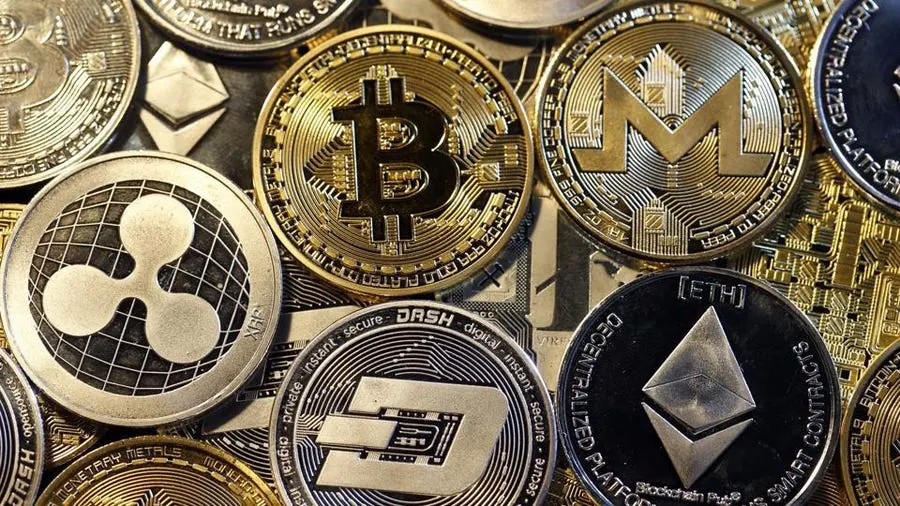
This gap is reflected in the skills highlighted by OECD-PISA surveys, according to which Italian students rank among the least prepared in Europe on topics such as money management, risk and financial instruments. And so, without consistent and widespread training, young people remain exposed to high risks when they independently approach complex tools such as cryptocurrencies, increasing the danger of impulsive investments and significant losses. In fact, cryptocurrencies are now seen as the easiest way to earn quick money. They are often associated with the idea of easy, almost automatic gains, achieved with little effort, a few clicks and no real work behind them; in most cases, however, the reality is completely the opposite: from a financial standpoint, cryptocurrencies are highly speculative assets, far removed from the stability of traditional instruments such as blue-chip stocks, government bonds or index funds. Moreover, the cryptocurrency market is often driven more by manipulation, rumors and hype (great clamor and interest around indexes or financial instruments that may not be based on solid fundamentals, ed.), than by real economic fundamentals. This makes it suitable only for those with an extremely high risk appetite and who can afford to lose all the capital invested.
At this point in history, cryptocurrencies are not a tool for building stable, lasting wealth, but something akin to gambling disguised as investment. Their extreme volatility, the lack of clear regulation and the spread of speculative practices such as the use of financial leverage make these assets particularly risky. The main cryptocurrencies, despite being popular and seemingly promising, confirm themselves as extremely unstable instruments, dominated by speculative factors rather than structured economic logic. Looking at data updated to July 2025, Bitcoin (BTC), the leading digital asset by market capitalization, has shown extreme volatility: from around €40,000 at the start of 2024, it rose to around €100,000 in January 2025, only to pull back sharply below €73,000 within a few weeks (12 April 2025), helped by tighter regulation from the U.S. SEC and some restrictive statements from the ECB on the tax treatment of cryptocurrencies.
Ethereum (ETH), which today trades at around €2,500, followed a significant growth path, rising from about €2,050 in January 2024 to a peak of €3,700 in December 2024, before plunging to €1,365 in April 2025. In between, in the period following the implementation of the technical upgrade known as “Verkle Trees”, aimed at improving storage efficiency and network scalability, there were some temporary issues in block finalization times that contributed to a loss of about 22% of ETH’s value in less than ten days, in a market context already marked by high volatility. Even more dramatic was the case of Solana (SOL) — now trading at around €160 — often promoted on social media as “the Gen Z crypto.” After rising from €92 (January 2024) to €252 (January 2025), it fell to €105 in April 2025. During this interval, in particular, Solana suffered a 38% crash in just 72 hours following a bug that paralyzed the network for 16 hours and after the announcement of a massive sell-off by a venture fund, thus showing that the world of cryptocurrencies is characterized by extremely high volatility.
These moves are not anomalies, but an integral part of the structure of the cryptocurrency market. Unlike traditional assets — which are tied to balance sheets, earnings, interest rates or tax policies — cryptocurrencies react in an amplified way to emotional, geopolitical or media-driven factors. In this context, even a viral tweet, an interview with a central banker or the mere rumor of a government ban can generate daily swings of 10-20%. Even so, more and more young people choose to expose themselves to these instruments with high financial leverage, that is, investing an amount far greater than their actual capital, thanks to funds borrowed from the platform. A 10x leverage, for example, allows €1,000 to be controlled with just €100 of margin, but a 10% drop in the asset’s value is enough to wipe out the entire position.
In such a volatile environment, the use of financial leverage should be reserved for highly experienced traders, equipped with professional risk-management tools, dynamic stop-losses and hedging strategies. Yet many crypto platforms present leverage in an almost playful way: with a “gamified” interface, eye-catching colors and buttons such as “Long Now” or “Buy with 20x Leverage”, giving the illusion that all it takes is picking the right moment to secure dizzying gains. The result? In many cases, leverage becomes a psychological trap, pushing inexperienced users to overexpose themselves, increase their bets after every loss, and chase an “all-in” logic similar to gambling. The risk of losing everything in just a few hours is not an exception, but a recurring pattern in crypto day trading without proper preparation.
Moreover, cryptocurrencies are often promoted by influencers on social media, who sell expensive training courses and promise easy, fast profits. However, many of these courses turn out to be little more than commercial traps, with superficial or even misleading content, designed to make users spend money without providing real preparation. This phenomenon helps fuel a market of misinformation that exposes young people to even greater risks. The crypto sector is in fact fertile ground for scams and fraud, where bad actors take advantage of widespread lack of knowledge to propose pyramid schemes, fake ICOs (Initial Coin Offerings) or tokens with no real value.
For these reasons, cryptocurrencies should be considered only by experienced investors who have a solid financial background and are able to assess the portfolio risks associated with an extremely volatile and opaque market. A well-built portfolio, on the other hand, allocates capital across different types of assets — such as stable stocks (blue-chip), government bonds, index funds and, only to a very limited extent, highly volatile instruments such as cryptocurrencies. This approach makes it possible to balance risk and return, reducing the likelihood of serious losses. Without this preparation, exposing oneself to crypto investments is like betting without knowing the rules of the game. Financial education therefore becomes crucial: only with in-depth, critical training can impulsive and dangerous choices be avoided. Without it, the risk of major losses and falling victim to scams is extremely high.

In a context where many young people put everything on cryptocurrencies, often relying on advice on TikTok or paid courses offered by influencers with no real expertise, there is a lack of a broader, more structured view of money management. Cryptocurrencies are treated as the only possible investment channel, completely ignoring the key concept of a diversified financial portfolio, which is the foundation of any serious and sustainable strategy. And so, in the absence of a solid base, cryptocurrencies do not become a tool for growth, but a misallocation error that can jeopardize one’s entire personal savings. In a long-term perspective, overexposing oneself to such an unstable and poorly regulated asset without any overall strategy is not only imprudent, but financially unsustainable as well.
* Economics student at John Cabot University and licensed journalist
Related articles



Newsletter
The Patrimoni & Finanza newsletter
A considered selection of analysis on economy, Real Estate and wealth
The subscription service is not connected yet: no address is stored