
The USA in the quagmire of the Balance Sheet Recession. What are the differences with the Japanese crisis of the 1990s?
Expansionary fiscal policies have not prevented stagnation, and those soon to come will not alter the economic cycle. Will it be like the Japanese crisis of the 1990s?
By Maurizio Novelli, manager of the Lemanik Global Strategy fund
The international economy is now effectively in a landing phase into stagnation, described by the mainstream as a "soft landing", and it will be rather difficult to get out of the quagmire we are entering. The expansionary fiscal policies now in place have not prevented the weakening of the economic cycle, and those currently being approved will not change the picture. The main reason for the loss of traction of fiscal policies is the difficult financial situation of the American Shadow Banking System, which for some years now has been floundering in a Balance Sheet Recession with uncollectible loans, investments that are no longer profitable and losses hidden in balance sheets. Despite the financial sector's efforts to showcase the performance of the US stock markets, now nationalized, everything underneath is in structural crisis and is now dragging the real economy into stagnation.
Since the "shadow" sector currently handles 60% of credit to the economy and around 90 trillion in assets (375% of GDP), including securitizations of every kind, Leveraged Loans, CRE, ABS and Private Credit, the money multiplier is also compromised, and a fall in US rates will have no significant effect on the economic cycle. In the CRE (Commercial Real Estate) sector alone, credit in distress is now at 25%, and we know nothing about the actual default rates in Private Credit or in loans to Venture Capital and Private Equity (5 trillion dollars, 20% of GDP). Meanwhile, the US government is preparing to give the green light to the law allowing Private Equity and Private Credit funds to be placed with retail investors in 5,000-dollar tranches.
The USA in the quagmire of the Balance Sheet Recession
US banks are currently the main provider of credit to the Shadow Banking System, which needs a constant rollover of maturing uncollectible loans in order not to book the insolvencies, but this mechanism does not change the quality of credit, which has in any case been insolvent for more than three years. Thus, while loans to the real economy have been stalled for several quarters now, those to Shadow Banking are growing at rates of 20%. This support for colossal distressed positions is one of the main reasons why the monetary and fiscal multipliers are losing effectiveness.
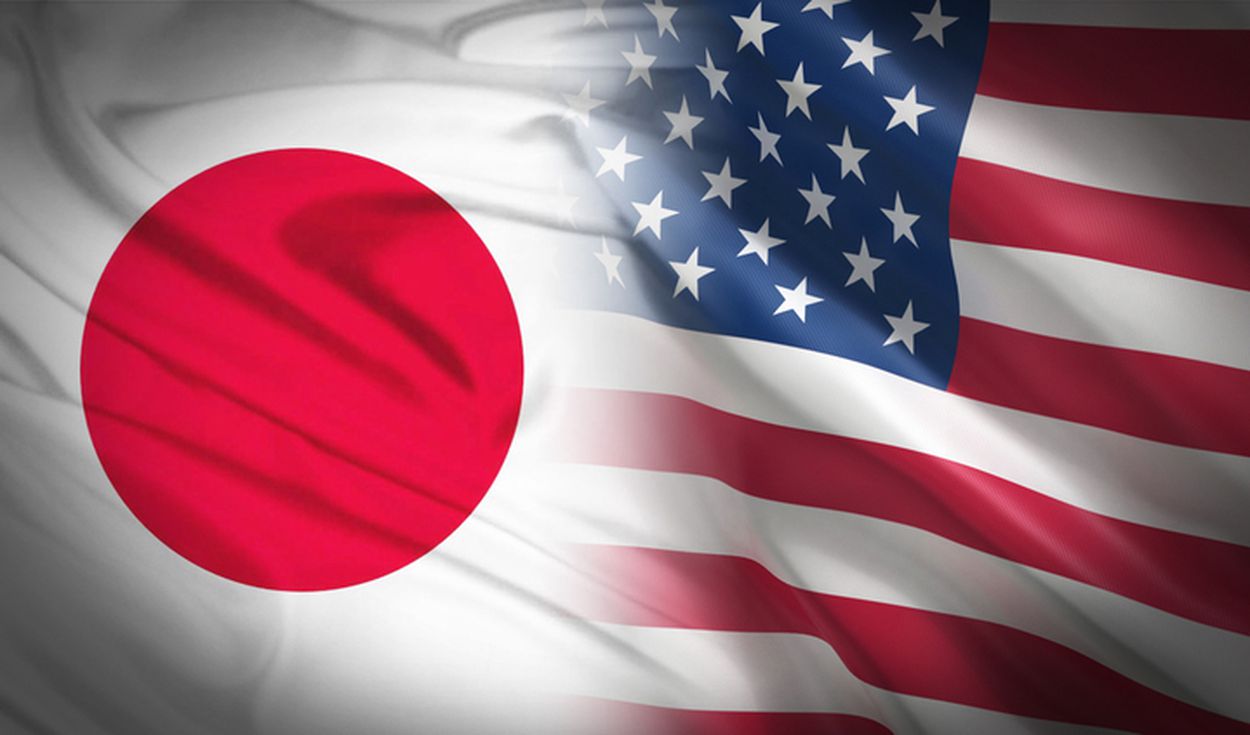
As happened in Japan in the 1990s, the United States is now also entering the quagmire of the Balance Sheet Recession. There are, however, some substantial differences between the Japanese and the American approach: 1) American policymakers, unlike the Japanese, are trying in every possible way to prevent the bursting of speculative bubbles and therefore have nationalized the stock market at the highs and capped 10-year Treasury yields on Treasuries (YCC). Japan had introduced yield control (YCC) but had allowed the speculative bubble on the Nikkei to explode, worsening the deflationary crisis and nationalizing the stock markets only later, when they were at their lows.
2) Japan experienced a sharp revaluation of the yen that worsened deflation, while the US is trying to engineer a marked devaluation of the dollar to create inflation and erode debt in real terms.
3) The United States is aggressively pursuing preventive reflationary policies through fiscal policy to avoid at all costs a recession, while Japan allowed deleverage in the private sector to begin, let the crisis explode and then launched supportive fiscal policies.
Although the final outcome in both cases is still an inexorable rise in public debt and stagnation, the short-term effects are for now substantially different:
A) in the case of Japan, fiscal policy was undermined by deleverage in the private sector and therefore the fiscal intervention was systematically "burned off" year after year. Debt-to-GDP rose from 40% to 240%, but the economy never really restarted.
B) the United States is fighting fiercely with fiscal intervention to avoid a recession that would be devastating for the Shadow Banking System and for the banks that finance it (exactly as in 2008). The priority is therefore to prevent deleverage in the private sector and postpone the problem for as long as possible, given that the Shadow Banking System is sitting on another 2008.
The critical issue with this latest operation is that the USA does not have enough domestic savings to finance such a strategy, which is based on endless debt growth with foreign capital, and therefore risks a capital flight and a drop in the dollar if it continues with the fiscal policies that are meant to avoid the crisis. Although the US strategy seems to work better in the short term, it still has sustainability limits because of the lack of adequate domestic savings to fund it. So, while everyone talks about the disastrous American fiscal policies, no one has ever asked why they are doing it.
Avoiding deleverage by adding leverage
Terrified by the Japanese experience, the USA is trying to avoid deleverage by adding leverage endlessly. The concern about the system's ability to hold together stems from the fact that the United States has the reserve currency, which, unlike Japan, entails disadvantages in situations of this kind. The reserve currency helps you create more leverage than anyone else, since it attracts foreign savings to finance it, but it accentuates deleverage in negative phases (see the 2001 and 2008 crises). It is therefore entirely normal and unsurprising that, in recent legislative measures, there is talk of taxes on foreign capital and a potential blockage of capital leaving the United States. Here too, everyone talks about it but no one has ever asked why they are doing it. Everyone talks about the Century Bonds, envisaged in Stephen Miran's economic plan, but no one asks why the United States would need to issue 100-year bonds at "political" rates in order to have them subscribed by the Central Banks of Europe and Japan.
For 4 years now, the US system has been in a constant bail out because it literally "blown up" on speculative credit in the Shadow Banking System, fueled by 14 years of irresponsible QE, and everything the policymakers do, unsurprisingly, confirms this scenario every day. The major American banks have for more than three years received systematic public support through the remuneration of excess reserves provided by the FED. Since they are burdened with unrecorded losses and hold trillions in Treasuries and MBS in their portfolios at average rates of 1.5%, in order to carry those positions they receive every year the 4% interest on 3.6 trillion in excess reserves supplied by the FED.
Indeed, when analyzing in detail the balance sheets of the top 10 US banks, it emerges that over roughly 60% of net interest margin is obtained thanks to the remuneration of those reserves that are provided to the system by the Central Bank. These interest payments are made by the FED, that is, by the Treasury Department, that is, by the American public budget. But despite this public intervention to avoid a banking crisis like the one in 2008, banks continue to do buybacks and reward CEOs with million-dollar bonuses. Naturally, no macro research coming from the Wall Street mainstream will talk about this situation, since the purpose of US intermediaries is now solely to try to keep foreign capital invested in this crisis-ridden system.
Tags
Related articles


Newsletter
The Patrimoni & Finanza newsletter
A considered selection of analysis on economy, Real Estate and wealth
The subscription service is not connected yet: no address is stored