
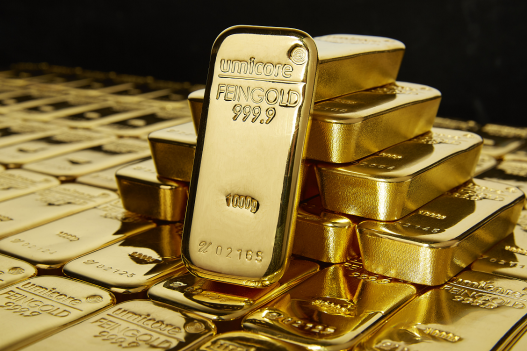
The tariff war brings volatile markets and more selective investors. Gold: the compass of the new monetary order
A commentary devoted to the impact on markets of the new tariff war and to the increasingly important role of Gold, which has gone from safe-haven asset to the absolute protagonist of the transformation of the monetary system.
by Diego Franzin, Head of Portfolio Strategies at Plenisfer SGR
The return of trade war, triggered by the announcement from the Trump administration of new tariffs of 10% against Eurozone countries opposed to the "Greenland" plan, confirms that economic levers are now an integral part of international political confrontation. And it is a move that reopens fronts of tension at a time when global growth is already showing signs of slowing.
The new tariff barriers increase uncertainty over the economic cycle and reinforce downward pressure on short-term yields. In the short term, the central scenario remains one of stable rates or lower rates, while hypotheses of hikes would come back into play only as a response to a more extreme risk: an unexpected return of inflation. Any cuts, on the other hand, will depend on the evolution of economic activity and of the labour market, growth factors that are today certainly more exposed to the indirect effects of trade tensions.
In the equity markets, a premium on geoeconomic risk could re-emerge and growth expectations are being revised with greater caution. The critical point is that investors are entering this phase with a long positioning on risky assets, after months of strong performance. This makes markets more vulnerable to sudden repricing, especially when political shocks quickly turn into economic decisions.
At the same time, more structural signals are emerging on the commodities front. After years of divestment, global allocations to commodities remain at historically low levels, while control of strategic resources — increasingly concentrated in a few areas of the world — is becoming a matter of economic sovereignty. Not by chance, in the United States exports of non-monetary gold have reached record levels, signalling a growing interest in real assets as a hedge against geopolitical risk, trade uncertainty and potential currency weakness.

If in the short term equities may still show a degree of resilience, the broader scenario points to caution. Part of the tension already appears to be priced in, but the rise in volatility is unlikely to be temporary and could accompany the start of the new year, marking the shift from a climate of widespread confidence to one of greater selectivity. Meanwhile, gold first surged past $5,000 an ounce and then, following the appointment of Walsh to the Federal Reserve, fell back sharply (followed by Silver) by 12% in a single trading day; in any case, with the $5,000 an ounce milestone, gold has stopped being a simple safe-haven asset and has become the indicator of a profound change in the global monetary and geoeconomic system. It does not react to the present, but anticipates the future.
The macroeconomic picture is well known, but what is changing is the way the market reads it. The accumulation of public debt and the increasingly complex management of monetary normalization are redefining long-term expectations. Gold captures this change before it becomes apparent elsewhere. It is in this context that central bank action should be interpreted: gold accumulation is not a response to the urgency of the moment, but to the strategic need to reduce exposure to currencies increasingly subject to political pressure and geopolitical instrumentalisation. Gold, unlike traditional financial reserves, cannot be frozen, diluted or conditioned by discretionary decisions.
2025 marked a further step: financial investors too have begun to treat gold no longer as a tactical hedge, but as a structural portfolio component, in a context where there is no credible risk-free benchmark in real terms. Gold is becoming the convergence point for different fears — geopolitical, monetary, institutional — to the point of being perceived as a universal solution. Not because it truly is one, but because the system struggles to offer an equally solid alternative. In this sense, the gold rally of the past two years is not pricing chaos, but the normalisation of instability: a world marked by greater indebtedness, less international coordination and growing political interference in monetary decisions. Gold is rising not because the system is about to break, but because its nature is changing.
Related articles

Newsletter
The Patrimoni & Finanza newsletter
A considered selection of analysis on economy, Real Estate and wealth
The subscription service is not connected yet: no address is stored