
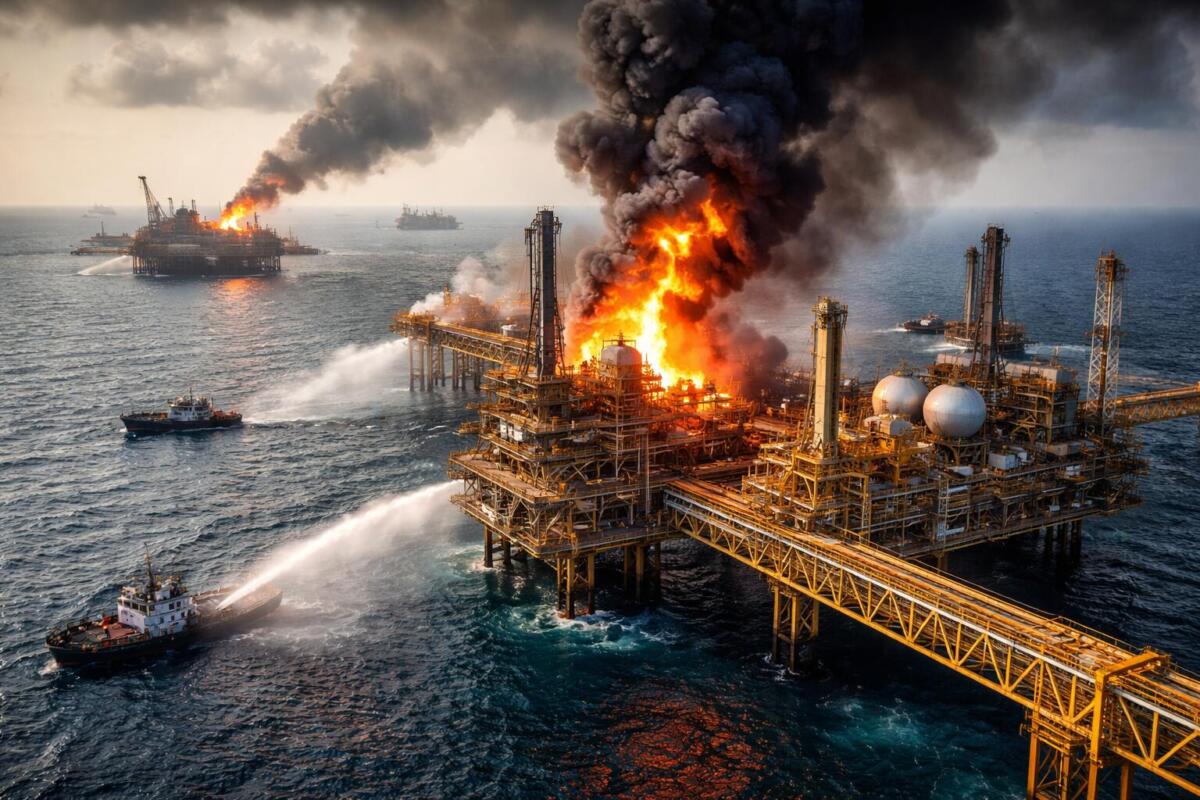
Energy in Wartime: the Return of a Strategic Constraint
Four years after Russia’s attack on Ukraine, a new conflict brings energy back to the center of the global economic system, highlighting its role as a structural constraint capable of influencing inflation, growth, geopolitical balances and technological paths.
by Marco Mencini, Head of Research Plenisfer Investments SGR
For more than a decade, the market has operated on the implicit assumption that energy was abundant and accessible. The expansion of US shale production, combined with relatively stable demand and the emergence of the ESG paradigm, had helped marginalize the traditional energy sector in global allocations. Energy had become a low-growth segment and was poorly represented in indices, to the point that it now accounts for only 3–4%[1], compared with about 14–15%[2] of the S&P 500 in the early 1990s, when the first Gulf War broke out. Yet once again, indices are capturing a picture that looks to the past, not to the trends underway and the future prospects of a sector that is now more strategic than ever.
A more rigid system in a more unstable world - Global energy resources remain vast, but their geographic distribution and the reliability of producing regions are becoming decisive factors. This vulnerability is unfolding in a context already weakened by years of missed investment. Regulatory pressure, decarbonization policies and a widespread perception that traditional sources have reached the “end of the cycle” have sharply reduced the flow of capital into the sector, leading to the erosion of productive capacity. In this scenario, the US shale cycle, which had been the main source of supply expansion over the past fifteen years, is entering a more mature phase. Production reached about 13.6 million barrels a day in 2025 and is expected to peak at around 13.8 million[3], signaling a gradual slowdown in growth.
In past years, when prices were high, US production rose quickly, helping to offset any global supply shocks. But greater capital discipline, industry consolidation and the maturity of the basins are reducing the speed at which production can grow, making supply less responsive. The combination of the three factors described points to an increasingly rigid energy market .
Slowing supply, market more exposed to shocks - The market is apparently in surplus (around 1.8 million barrels[4] a day), but this balance is being sustained by a few temporary factors, making it more vulnerable to sudden shocks. The system is no longer built to absorb volatility, but tends to react in a non-linear way. The demand dynamic is increasingly helping to support this fragile balance, particularly through the role of China. In recent years, Beijing has accumulated record levels of oil inventories, exceeding 1.2 billion barrels, equal to more than 100 days of imports[5]. This stockbuilding process has acted as a true market buffer, absorbing part of the excess supply and helping stabilize prices. In a context of growing uncertainty over the reliability of supplies, strategic inventory management becomes a central element of the global balance.
A second, structural factor overlays this dynamic: the emergence of artificial intelligence as a driver of energy demand. The growth of data centers and digital infrastructure is introducing a continuous, concentrated and inflexible demand that requires stable and programmable energy. This is creating a tension between the energy transition and supply security, and the need to balance these objectives is becoming increasingly clear. In addition, an important source of complexity is the growing geographic divergence in energy prices. While oil remains a global market, gas is now a deeply regional one. This means that economic competitiveness no longer depends solely on technological or financial factors, but also on the relative cost of energy.
In this context, Europe appears particularly exposed. The combination of dependence on imports, regulatory constraints and delays in investment reduces the system’s ability to adapt. At the same time, demand growth linked to new technologies risks further widening this gap. The issue is not only economic, but strategic, because it directly affects the ability to sustain industrial development over the long term. The return of energy security therefore represents the real paradigm shift. It is no longer just a matter of optimizing costs, but of ensuring access, stability and predictability over the long term. This implies a return to industrial planning logic and to choices that prioritize resilience over efficiency.
From an investment perspective, these dynamics suggest that the energy sector is entering a new phase of the cycle. The combination of rigid supply, growing demand and limited capacity creates the conditions for a structural improvement in profitability. In particular, the scarcity of capacity and lower competition are strengthening pricing power לאורך the value chain. Energy is therefore once again emerging as a central real asset in a macro backdrop marked by more persistent inflation and greater uncertainty, with the conflict in Iran marking the start of a phase in which the availability of energy becomes one of the main drivers of global growth.
Disclaimer
This analysis relates to (“Plenisfer Investments”) and is not a marketing communication relating to a Fund, an investment product or investment services in your country. This document does not constitute an offer or an invitation to sell or buy securities or any asset or business described herein and does not form the basis of any contract. Any opinions or forecasts provided are as of the specified date, may change without notice, do not predict future results and do not constitute a recommendation or an offer of any investment product or service. Past performance is not a guide to future returns. There can be no guarantee that an investment objective will be achieved or that there will be a return on capital. This analysis is addressed exclusively to professional investors in Italy pursuant to Directive 2014/65/EU on markets in financial instruments (MiFID). It is not intended for retail investors or US Persons, as defined in Regulation S of the United States Securities Act of 1933, as amended. The information is provided by Plenisfer Investments, authorized as a UCITS management company in Italy, regulated by the Banca d'Italia - Via Niccolò Machiavelli 4, Trieste, 34132, Italy - CM: 15404 - LEI: 984500E9CB9BBCE3E272. All data used in this analysis, unless otherwise stated, are provided by Plenisfer Investments. This material and its contents may not be reproduced or distributed, in whole or in part, without the express written consent of Plenisfer Investments.
[1] Source: Plenisfer elaboration on Datatrek Research data
[2] Source: Plenisfer elaboration on SSGA data
[3] Source: Plenisfer elaboration on Bloomberg data
[4] Source: Bloomberg
[5] Source: OPEC
Tags
Related articles


Newsletter
The Patrimoni & Finanza newsletter
A considered selection of analysis on economy, Real Estate and wealth
The subscription service is not connected yet: no address is stored