
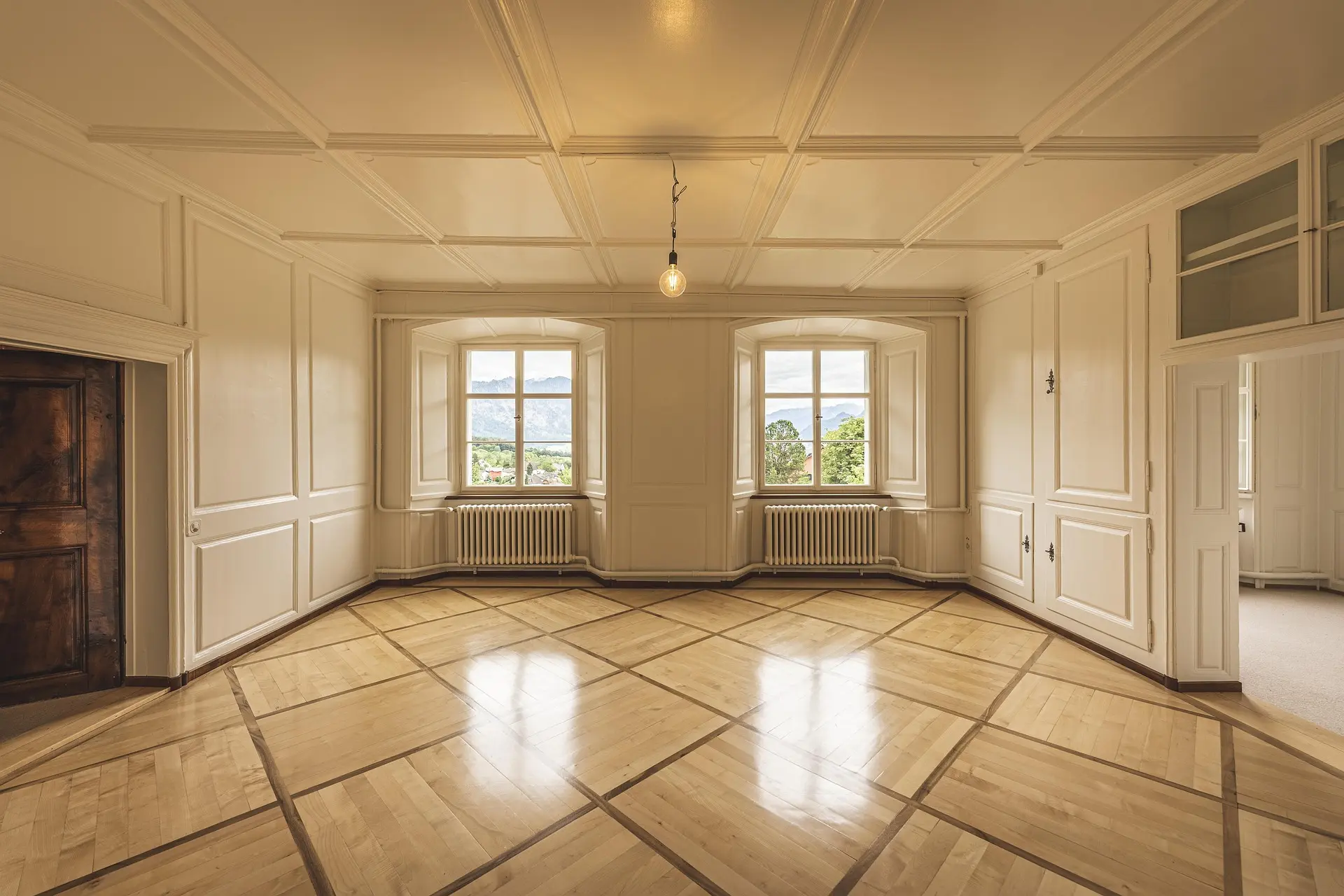
Seniors and spacious apartments: for heirs, splitting the property may be the answer
Subdivision can turn an oversized home into more manageable homes for children, but whether it is worthwhile depends on the property, the cost of the work and local demand
A significant share of the patrimonial transfer to later generations is concentrated in the large homes of older generations. Subdivision can turn an oversized property into homes more manageable for children, but whether it is worthwhile depends on the features of the house, the cost of the work and local demand.
Seniors continue to play a central role in Italian families: they care for their grandchildren, support their children financially and safeguard a substantial share of the assets accumulated over a lifetime. Meanwhile, as the baby boomers and earlier generations grow older, deciding what future to give their homes becomes increasingly important. These are often houses bought when the children still lived in the family home, designed for needs that no longer exist in the same form today. The issue concerns both those who continue to live in them, perhaps alone or as a couple, and those who will inherit them and must understand how to use them without turning an inheritance into a financial burden that is hard to bear.
The link between seniors and real estate remains very strong. According to the 2023 Permanent Census data, published by Istat in February 2026, 83.6% of households made up exclusively of people aged at least 65 live in a property they own. This figure helps illustrate the scale of the issue, even if it does not tell us how many apartments are actually suitable for subdivision. A house purchased to accommodate a large family can become oversized relative to the owners' needs and poorly aligned with those of future heirs. Its asset value remains important, but it must be weighed against available income, management costs and practical possibilities for use.
Inheriting a large house does not mean you can afford it
When children come into possession of their parents' home, the options remain those identified in the original article: move into it, leave it empty, rent it out or sell it. None of these choices, however, is free of consequences. A large apartment may require significant condominium fees, work on the systems and extraordinary maintenance work; if it is located far from where the heirs live and work, an organisational difficulty is added to the financial one. Having an asset of value therefore does not coincide with having the money needed to keep it, especially when the owners already have to bear the cost of their own home and family.
For many families, the generational transfer highlights precisely this gap between assets and income. Children may receive a house they could hardly have bought with their own resources, yet have neither the interest nor the financial means to keep it in its original configuration. This does not mean that all young people have insufficient income or reject large homes: there are many different situations, including highly asset-rich families. It does mean, however, that real estate inheritance must be assessed in the actual life of the person receiving it, without assuming that the parents' choices automatically remain suitable for the next generation.
The market must meet new housing needs
A fondness for bricks and mortar and for apartments with many rooms is part of the economic and family history of our country. For those who built security through work and savings, a large house could represent stability, success and space for children. Today that same property faces a more varied demand: single people, couples, families of different sizes and buyers who must balance price, affordability and energy efficiency. This change makes it necessary to look at the market in each specific area, because the size of the apartment alone is not enough to predict its commercial success. A large, well laid out and well located home may be much sought after; a house that is equally large but expensive to refurbish may face greater difficulties.
The old belief that property is destined to rise in value forever should therefore be set aside, without replacing it with the opposite idea that all large houses must lose price. Location, floor, lift, brightness, the quality of the building and the condition of the property all matter. Even when the price per square metre seems reasonable, the overall cost of purchase and work may reduce the number of potential buyers. A smaller home, by contrast, may have an overall price that is affordable to a different audience. Subdivision becomes interesting when it brings the asset closer to the needs of that demand, while preserving good living quality.
Parents' homes may need to be rethought
Many apartments bought decades ago still have internal layouts, systems and finishes that do not match the expectations of today’s users. Long corridors, hard-to-use rooms and numerous bedrooms may be impractical, while insulation, climate control and accessibility require specific checks. It would, however, be wrong to attribute the same flaws to all homes built in the 1960s or 1970s: some have construction quality, ceiling heights and outdoor spaces that are difficult to find in more recent properties. The task is to distinguish what is worth preserving from what needs to be updated, avoiding a generic judgment about the age of the building replacing a technical assessment.
The emotional bond with the house can also make this analysis difficult. For a parent, reducing the space may mean giving up part of their own history; for a child, suggesting a change may feel disrespectful. Subdivision can offer an intermediate solution: keeping part of the home and assigning the other part to a relative, rental or sale. It is not a path suited to everyone, but it makes it possible to discuss the future of the house without reducing the choice to a simple either-or between keeping it intact and letting it go. When the owner is still alive, their consent, safety and the sustainability of the work in relation to their needs must remain central.
Subdivision can make assets more manageable
Dividing an apartment into two autonomous units can make it possible to spread assets more effectively among several heirs, generate liquidity through a partial sale or add a property to the main home to be put to income. For those who need to sell, it can create two offerings with combined prices lower than that of the original house; for those who want to rent, it opens the door to different housing needs. None of these advantages is automatic: the new units must be well designed and have features that the market recognises as useful. A subdivision that produces poorly lit rooms, awkward access or cramped layouts can reduce value rather than increase it.
The technical feasibility must therefore be checked before any economic expectations are formed. Under certain conditions, the Consolidated Building Act includes subdivision with works within extraordinary maintenance, provided the overall volume of the building does not change and the original intended use is maintained. This does not amount to a general authorisation for any project. A technician must assess planning compliance, the requirements of the new homes, structural works, systems, access and any constraints, identifying the applicable formalities. Cadastral division, on its own, does not replace the building regularity of the work.
Old calculations must be replaced with an economic plan
The 2020 article contained examples of costs, sale prices and rents that can no longer be used today as reliable benchmarks. For an apartment of 150 or 160 square metres, the cost of subdivision depends on the existing layout, the need to create new bathrooms, the level of renovation and the condition of the systems. The estimate for the work must also include technical fees, paperwork, any charges, financial costs and a margin for contingencies. The assessment must also clarify whether the aim is to create a simple functional separation or to fully refurbish both homes, because these are economically very different operations.
The correct comparison concerns the net proceeds of the alternatives: selling the whole apartment in its current condition, renovating it while keeping it together, or dividing it and selling the new units. Any higher overall price must offset all costs and the time needed for the operation. Rental also requires a comparison net of expenses, maintenance, taxation and vacant periods: simply adding up two higher rents is not enough to prove it is worthwhile. Subdivision creates value when the net result is better and remains sustainable even with longer timelines or proceeds lower than expected.
A solution to prepare before the house becomes a problem
The issue identified six years ago remains current and becomes more important in the context of an ageing population and the transfer of assets between generations. The large houses of the parents can remain a resource, provided their need for adaptation is recognised. Leaving them unused for years, postponing the work or waiting until all the heirs agree on every detail can increase costs and difficulties. A preventive assessment, by contrast, makes it possible to identify the available options and discuss concrete elements: feasibility, required investment, local demand and the destination of the new units.
Subdivision therefore retains its value as a possible tool for enhancement and family organisation. It can make an asset more manageable, facilitate a division among heirs or free up resources without selling the entire real estate portfolio. But the promise of a guaranteed “solution” must be replaced with a verifiable project, in which living quality and economic convenience move together. The parents' house can retain its value even as it changes shape: what matters is that the new shape suits the lives and possibilities of those who will live in it or manage it.
Tags
Related articles


Newsletter
The Patrimoni & Finanza newsletter
A considered selection of analysis on economy, Real Estate and wealth
The subscription service is not connected yet: no address is stored