
Luxury hotels: value is built before rates are raised
Deloitte’s research into repositioning strategies reveals interest in high-end hospitality. Turning a building into a sustainable investment, however, requires an operational plan, adequate capital and an operator suited to the market
Luxury as an economic project
A prestigious building can be the starting point for a luxury hotel, but it does not guarantee its economic success, because architectural value must meet demand willing to pay, appropriate services and management capable of maintaining them over time. It is through this transition from the quality of the property to the quality of the business that The Italian Luxury Hospitality: Time to Elevate?, Deloitte’s study of investment and repositioning strategies in high-end hospitality, should be read, rather than reducing it to a forecast of higher rates. The research is interesting for the way it connects sustainability, the guest experience and enhancement of existing property assets, while the issue requiring closer examination by owners is what happens between purchasing the building and the first year of genuinely stabilised operations. Luxury can increase potential revenue, but it also requires more capital, staff and organisational precision, and becomes an investment only when these elements are brought together in a plan that remains sustainable even without immediately achieving the performance of the most established properties.
The time frame needs to be clarified before interpreting the findings: the survey was conducted between July and September 2025 through online questionnaires, involving over 900 Italian and international operators and investors with a response rate of 25%, and describes expectations extending to 2027. It therefore does not represent over 900 completed responses or a retrospective snapshot of November 2026, and its indications cannot be turned into results already achieved by the sector. The synopsis highlights clients’ pursuit of time, authenticity and personalisation, alongside the integration of accommodation, wellness and dining; from a property perspective, the implication is that a building must support a distinctive offering rather than simply display expensive finishes. For investors, this means defining the customer and the reason for their stay before assigning a price to rooms, because a hotel built around a generic idea of exclusivity can have a convincing image yet insufficient demand to cover its cost structure.
The historical data cited by Deloitte indicate around 4,7 million arrivals and 14,1 million overnight stays in Italian five-star and five-star luxury properties in 2024, while hospitality investment reached around 2 billion in the same year; for the first half of 2025, the report records 1,7 billion and a luxury share of 51%. These scopes must be kept distinct, without automatically attributing all hotel transactions to luxury alone or confusing property investment with hotels’ revenue. Italy’s ability to attract interest must likewise be read as a favourable context rather than a guarantee of finding an operator for every available asset, because cultural and landscape heritage is no substitute for accessibility, spatial layout and sustainable management. The difference between a desirable destination and a financeable project lies in being able to demonstrate who will use the hotel, for how long and on what terms, rather than solely in the evocative power of the location or the building’s name.
Expected rates are not guaranteed income
The synopsis presents favourable expectations for revenue and rates, but the full report allows distinctions between groups: operators expect ADR, meaning average revenue per room sold, to rise from 780 euros in 2025 to 970 in 2027, while expected occupancy rises from 71% to 75%. These are forward-looking responses from the sample, not rates applicable to any Italian hotel, and they do not justify incorporating those levels into a new property’s plan without a competitive assessment. A building being repositioned must establish its reputation, sales channels and service quality, and the initial period may present a different balance from that of an already recognised hotel; occupancy also depends on the opening calendar, seasonality and the customer mix. The resulting editorial analysis is that the business plan should explain the progression from initial opening to stabilised operations, making sales and marketing costs and liquidity requirements visible during the months when the desired image has not yet translated into sufficient bookings.
An example independent of Deloitte’s forecasts helps explain the risk: a hypothetical 40-room hotel, open 365 days, with an average rate of 600 euros and occupancy of 65%, would generate around 5,69 million in annual room revenue, whereas at a rate of 550 euros and occupancy of 55% this would fall to around 4,42 million. The difference exceeds 1,2 million without changing the building, and concerns revenue before salaries, commissions, utilities, maintenance, taxes and financing, not the owner’s profits. The calculation is not a market forecast, but shows why small simultaneous changes in price and occupancy can significantly alter the outcome, particularly when some costs must be borne even with few rooms sold. Revenue from dining and other services can be added, but these require their own organisation and expenditure; assessing the investment therefore means following the money through to the operating margin and the cash flow available after commitments, rather than attributing to the property all the turnover that the hotel business manages to generate.
The capital required goes beyond visible refurbishment, because design, building services, furnishings, operating equipment, pre-opening costs and resources to support the launch all contribute to the overall funding requirement, while any delays can increase interest costs and postpone receipts. An investor should distinguish what is needed to acquire the asset from what is needed to transform it and what is needed to keep the business running until it breaks even, retaining a contingency reserve rather than spending all available funds on construction work. For historic buildings, preliminary checks also concern the feasibility of the works, the compatibility of uses and the relationship between available floor area and space that can actually be sold, because a large volume does not automatically equate to a high number of economically usable rooms. The risk in a transaction can emerge precisely when the beauty of the asset encourages these questions to be deferred, allowing the price to be justified by its appeal and leaving the issue of profitability to the operator only after the main commitments have been made.
The historic building must be capable of becoming a hotel
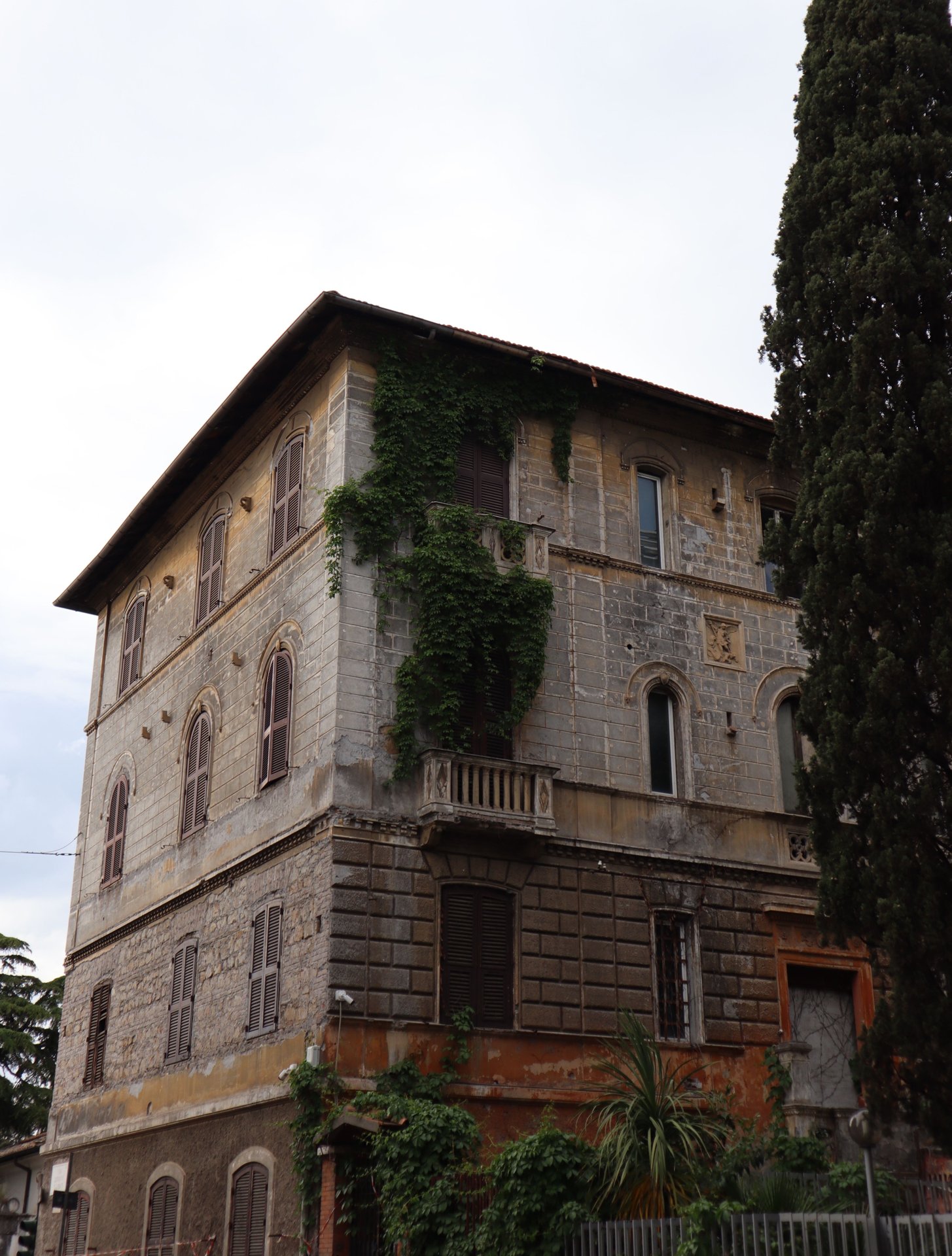
The repositioning discussed by Deloitte is particularly interesting in a country rich in existing heritage, but requires an assessment of whether the transformation maintains a balance between identity and function: rooms, bathrooms, staff routes, storage areas and building services must coexist without compromising the guest experience. A monumental staircase can be a distinctive feature while failing to resolve operational circulation, and generous areas devoted to reception rooms and passageways can reduce those available for sale; the quality of the design is also measured by its ability to identify these limitations early. The economic implication is that reducing the number of rooms to provide larger spaces can support a higher price, but that premium must compensate for the lower capacity and the shared costs that remain; conversely, increasing the room count at the expense of comfort and authenticity can weaken the positioning the project sought to achieve. There is therefore no transformation suitable for every historic building, and the project should emerge from discussions between architect, economic adviser and operator before the financial plan is set in stone.
Dining plays an important role in Deloitte’s analysis, which considers it part of a hotel’s identity and relationship with its local area, but turning it into a genuine contribution to results requires separate assessments of demand from residents and non-residents. A restaurant can strengthen the hotel’s brand, attract local customers and make a stay more appealing, yet it can become costly if staffing, space and organisation are sized for an unproven volume of customers; a chef’s prestige or the beauty of a dining room does not remove the need for this assessment. The decision to welcome non-resident guests must also be consistent with the property’s access arrangements, privacy and atmosphere, because the commercial benefit can conflict with the experience of those staying there. For the owner, the useful question is what contribution the service generates after costs and what measurable benefits it brings to the rooms, rather than adding together disparate streams of turnover as though every euro had the same margin and required the same capital.
Sustainability, another theme in the study, takes on concrete meaning when it translates into controllable consumption, straightforward maintenance and reliable comfort, rather than a simple marketing claim. A spa, a heated swimming pool or a wider range of services can support positioning, but they increase operational requirements and must be assessed against demand, seasonality and staff availability; in an existing building, integrating building services may also require particularly sensitive solutions to preserve its characteristics. The economic analysis should show operating and replacement costs over time, because a high-end hotel must maintain high standards after its opening and cannot indefinitely defer the renewal of the elements that underpin its price. The apparent return can therefore be inflated when an adequate reserve for furnishings and equipment is missing, whereas recognising those expenses from the outset makes it possible to distinguish genuinely distributable income from sums that will need to be reinvested to avoid losing competitiveness.
Ownership and management must share the project
The choice of operating model changes the risk retained by the owner, because a lease, a management agreement and direct operation do not distribute revenue, investment and responsibilities in the same way. In the first case, the sustainability of the rent depends on the financial strength of the business paying it and the agreed obligations, while under a management agreement the owner can participate more directly in operating results but must understand fees, incentives and funding requirements; the presence of a brand alone does not indicate which party has assumed the economic risk. This analysis does not stem from a Deloitte promise of returns, but from the need to make comparable proposals that may use the same commercial language while offering different protections. Before choosing an operator, it is therefore necessary to understand who funds the works and renewals, how budgets are approved and what happens if performance remains below plan, ensuring that owner and operator share more than their initial enthusiasm and do not subsequently face diverging incentives when operational adjustments are needed.
For property owners in less established destinations, the challenge is not to replicate the rates of iconic luxury locations, but to identify a credible reason for a stay and an organisation capable of capturing that demand. An experience centred on culture, landscape or wellness can make a location appealing, provided that transport connections, services and the length of the season allow the business to be sustained; the advantage of a lower purchase price can be absorbed by higher sales and marketing costs or a shorter opening period. The number of rooms must also be viewed in this light, because a small property can offer intimacy but spread essential costs across few units, while a larger project requires sufficient demand to prevent its scale from becoming a burden. The assessment should therefore include alternative scenarios and exit options, maintaining the distinction between the asset’s personal appeal and the interest that another investor or operator might see in it once the project is complete.
Deloitte’s study thus offers a starting point for viewing Italian high-end hospitality as a process of value enhancement, without turning its expectations into a free pass for any property conversion. Existing heritage can offer identity and differentiation that are difficult to replicate, but economic value emerges only if the promised experience can be delivered, the capital covers the entire process and management maintains the standards on which the price depends; when one of these conditions is missing, raising the rate in the plan does not solve the problem. For the owner, the most important decision may be to entrust the project early on to professionals capable of testing its assumptions, rather than merely seeking confirmation of the original idea. A sustainable luxury hotel emerges when building, market and business work in the same direction, and the result must be measured by what remains after delivering the service and preserving the property, not by the figure appearing beside the photograph of the room.
Tags
Related articles

Newsletter
The Patrimoni & Finanza newsletter
A considered selection of analysis on economy, Real Estate and wealth
The subscription service is not connected yet: no address is stored