
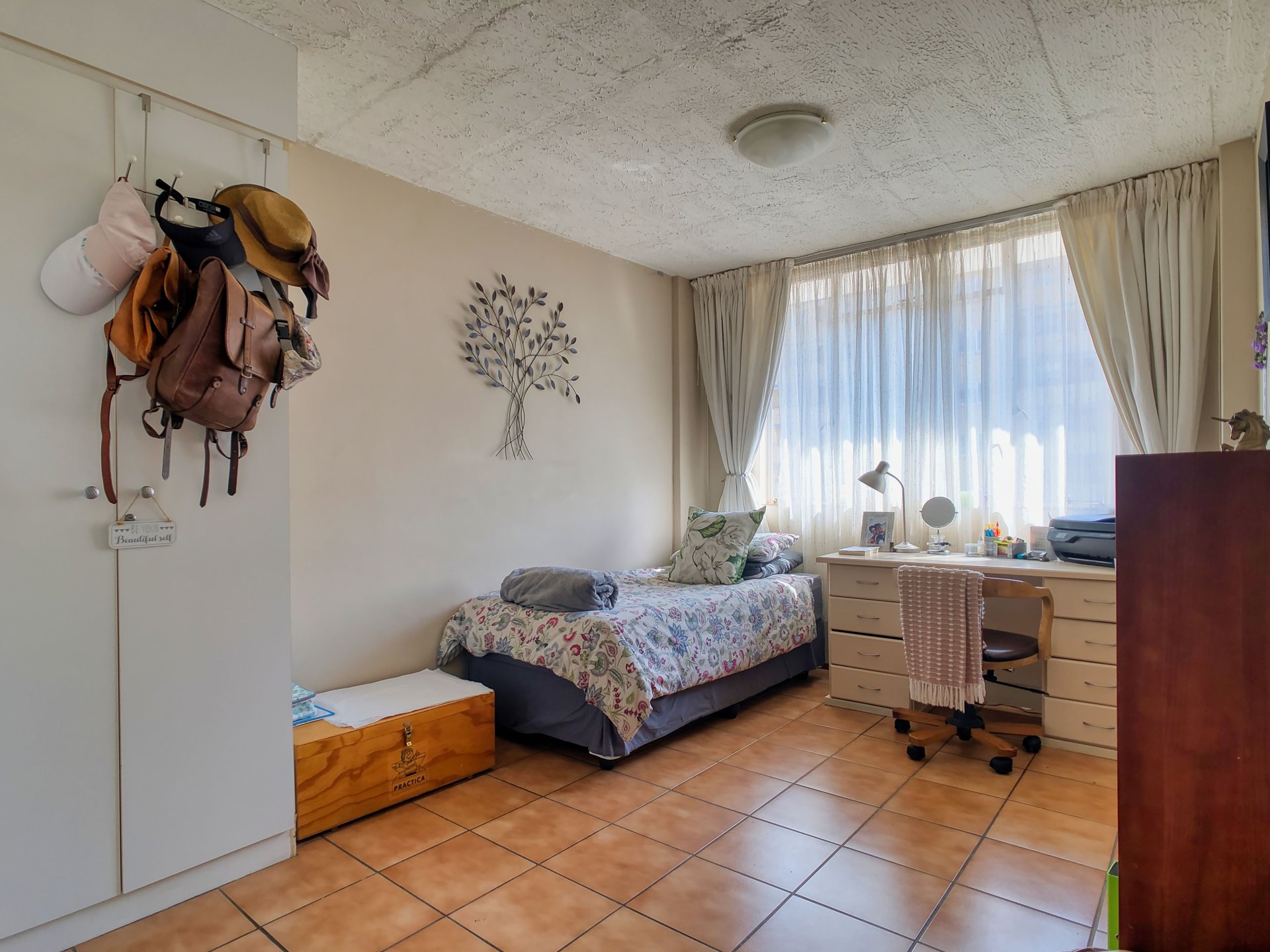
Investing in rooms for students living away from home: analysis and comparison with holiday lets
Rents, payment reliability, arrears and management costs in Italian university cities. A comparison of the income left to the landlord after tax and an analysis of the stability of receipts and the work needed to secure them
A room, a desk and a reliable internet connection are, for a student living away from home, the minimum requirements for starting a new life; for the landlord, they can become a relatively stable source of income, with less organisational effort than tourist accommodation, provided the flat is suitable and the tenancy is affordable for those who will live there. Between these interests lies a market that deserves analysis beyond the usual narrative of soaring rents, because a room’s value depends not only on the amount charged each month, but on the continuity of payments, the length of the tenancy and the property’s ability to remain attractive over time.
The question for the landlord is therefore how much a home let to university students can really yield, and how credible the student’s reputation is as a punctual tenant, supported by a family that regards rent as a priority expense; the comparison with holiday lets makes the issue even more interesting, because the price of a few nights may seem enough to exceed a month’s student rent, only to face an ordeal of commissions, cleaning charges, utility costs and vacant periods before finally becoming disposable income.
Eight cities and different markets
As with B&Bs, there is no single Italian market for rooms for students living away from home, because Milan, Bologna and Florence have different characteristics from Palermo, Bari and Naples, while Rome and Turin encompass university catchment areas spread across very large territories, where the neighbourhood and transport links to the actual teaching site can matter more than the city average. A consistent basis for comparison is provided by the Immobiliare.it Insights survey, published in August 2026, which allows the eight cities considered to be examined together without confusing surveys based on different criteria and analytical objectives.
These are, however, advertised asking prices, not rents actually agreed, nor figures exclusively relating to university student tenancy agreements, and above all not amounts automatically permitted under the local agreements governing agreed rents. This distinction is essential for anyone planning an investment, because multiplying the average price of a single room by the number of rooms available can produce an unrealistic theoretical revenue figure if the home offers a lower standard than the sample, if the price includes different expenses or if the chosen tenancy agreement requires compliance with local rent bands that must be checked before the advert is published.
| City | Single room per month | Annual change |
|---|---|---|
| Milan | 704 € | −3,8% |
| Florence | 627 € | +3,3% |
| Rome | 615 € | +7,0% |
| Bologna | 585 € | −7,5% |
| Turin | 479 € | +0,5% |
| Naples | 447 € | +0,5% |
| Bari | 426 € | +12,2% |
| Palermo | 315 € | +13,6% |
A more recent survey, the HousingAnywhere index for the third quarter of 2026, also points to stabilisation, with a median price for furnished rooms of 650 euros in Milan, down 4,4% year on year, and 670 euros in Bologna, down 4,3%; the difference from the earlier figures is not a contradiction, because the sample, method and characteristics of the accommodation differ, while across the international sample analysed by the platform, 66% of properties include bills in the price. For landlords, the implication is that comparisons must involve genuinely comparable accommodation, checking included expenses, quality, transport links and how long listings remain on the market, rather than relying on the most favourable figure available. Milan and Rome can offer high receipts but require equally substantial purchase capital, while Palermo and Bari start from lower rents without this necessarily implying a lower percentage return; what determines whether an investment is worthwhile is the relationship between the total capital invested and sustainable net income, together with the ease of finding new occupants when a student completes their course or moves elsewhere.
The reputation for paying reliably
The student’s reputation as a reliable payer has a plausible explanation, because the family can budget for rent alongside university fees and other living expenses, while losing the room means jeopardising arrangements made to enable their child to study away from home; this logic, however, does not constitute statistical evidence and does not justify assuming that the category is automatically reliable. The public sources consulted provide no sufficiently robust and comparable national measure demonstrating that students have a lower rate of rent arrears than other categories of tenant, nor do they provide a reliable national rate of damage to student flats. General rental surveys do not fill this gap: Nomisma’s Osservatorio Affitti 2025 for CRIF reports, for example, that 3% of respondents are currently in arrears or late with payments, but this is a self-reported survey of the rental market, which does not measure students’ behaviour alone and cannot be applied to the university segment to support claims that unpaid rent is rare or statistically negligible.
The useful conclusion for a landlord is that a student can be an excellent tenant when the tenancy is affordable and the source of payments can be verified, whereas university enrolment alone is no guarantee: a family with two children living away from home may face a heavy financial burden, a scholarship may arrive after the rent falls due, and a transfer or interruption of studies may alter an initially reasonable balance. References to the family also require precision, because a parent who regularly pays the rent does not thereby automatically become a contractual guarantor and, if their commitment is part of the landlord’s decision, it must be formalised in writing, defining the obligations covered and the duration. Rather than seeking an abstract ideal tenant, it is therefore worth establishing who will actually bear the cost, with what resources and with what continuity, also taking utilities and ancillary charges into account; pushing the rent beyond what is affordable can increase risk precisely when it seems to improve the return, particularly when a family accepts onerous terms because of the urgent need to find accommodation before classes begin.
Room quality and location
A flat suitable for students is not simply a home into which many beds can be fitted, because it needs genuinely usable rooms, light, ventilation, safe installations, appropriately sized communal spaces and a layout that allows people to live and study without constant conflict, in compliance with the applicable requirements. Economic value is also built through unobtrusive details, such as a decent mattress, a comfortable chair, enough sockets, a working washing machine and a fridge adequate for the number of occupants, while an unreliable internet connection can weigh more heavily in the decision than elegant decoration. In the eight cities considered, the reference point should always be the site where the course is taught, because “near the university” is too generic a description when classes take place across different campuses; a cheaper room with poor transport links can impose greater travel costs and longer journeys, while a well-connected room can support a reasonable rent and encourage tenants to stay. The comparison also includes student halls and private residences, without needing to copy all their services: often the competitiveness of a traditional flat lies precisely in a more affordable overall cost, more space and transparent terms.
Contracts guarantees and shared living
The specific tenancy agreement for university students runs for between six months and three years and requires the conditions laid down by the regulations, including the relationship between the place of study and the tenant’s residence, while rent, renewal and termination must be arranged within the framework of the ministerial decree of 16 January 2017 and the applicable local agreement; simply naming a document a “student tenancy agreement” is therefore not enough to obtain the desired duration and tax benefits automatically. The choice between separate agreements for individual rooms and a single agreement in several students’ names also changes the management of risk and everyday relationships, because in the former case the landlord handles multiple tenancies and individual replacements, while in the latter they must carefully regulate obligations, liabilities and replacement tenants, avoiding a situation where one flatmate’s departure triggers improvised negotiations over who should pay their share or choose their replacement. The security deposit offers limited protection and is not additional revenue: the law stipulates that it must not exceed three months’ rent and must accrue interest at the statutory rate, while its purpose remains separate from payment of the final months’ rent, which cannot automatically be treated as offset against the deposit.
Preventing damage begins above all with a signed inventory, shared photographs and a report distinguishing existing defects from the condition at handover, because a chair worn through use is not the same as a broken door and, without documentation, even an apparently obvious problem can turn into a dispute that is difficult to resolve. House rules should clarify cleaning of communal spaces, noise, waste, smoking, guests and reporting faults, respecting occupants’ rights without turning the agreement into intrusive monitoring of their private lives; an evening with friends may add a little colour, but a management problem arises when noise, overcrowding or neglect recur without being addressed. In the absence of a reliable rate of damage specifically attributable to students, the budget must include a reserve for maintenance and furniture replacement, without turning a category of tenants into a stereotype; cleaning, too, normally organised by occupants in traditional lettings, requires clear responsibilities to prevent communal space from becoming somewhere everyone waits in vain for others to act.
A fair comparison with holiday lets
In everyday language, “B&B” is often used for any flat offered to tourists, but a holiday let and a bed and breakfast are not the same activity, because the latter belongs to the hospitality sector and is also subject to regional regulations, with its own services and requirements; to compare two alternative uses of the same property, it is therefore more accurate to set student rooms against a short-term let of the entire home, reserving a separate financial plan for a genuine B&B. Obligations in the tourist sector, from the national identification code to applicable safety requirements, must be assessed according to the precise type of activity, without indiscriminately transferring the rules of one arrangement to another. The operational advantage of students stems from their longer stays, which reduce the frequency of preparing and handing over the accommodation but do not eliminate maintenance, payment monitoring, relations between flatmates and the search for replacements; on the other hand, efficient holiday-let management can capitalise on periods of strong demand, provided the landlord has the necessary organisation and does not treat work they perform personally as profit without assigning it any cost.
In urban tourism, turnover can be much more frequent than every one or two weeks, as suggested by Istat’s general benchmark, which records an average stay of 2,82 nights across all accommodation establishments in the fourth quarter of 2025: this is not a specific measure of flats in the eight cities, but it indicates why assuming weekly stays as the norm can underestimate the operational workload. With 220 occupied nights and an assumed stay of three nights, there would in fact be around 73 stays a year, each involving communications, arrival, departure and cleaning and preparation, while any delays, breakdowns or disputes may require availability even on public holidays. Some tasks can be automated or outsourced, but someone must carry them out and the associated cost must be included in the figures, including the availability of a stand-in when the landlord is absent; the comparison with students therefore becomes more realistic when income and time commitment are considered together, rather than looking only at the advertised nightly price or the rent stated in a room listing.
A simulation using the same flat
Consider a flat with three single rooms and a total capital commitment of 250.000 euros, including purchase, expenses and initial preparation, noting that the simulation is purely illustrative and does not represent a market estimate for any of the eight cities. For students, we assume three rooms at 400 euros a month and the equivalent of 10,5 months’ rent collected per room, with utilities paid separately by occupants and an allowance against a full year that incorporates vacant periods and possible unpaid rent; the rent must in any event be compatible with the local agreement when using the preferential tenancy agreement. For tourist use, we instead assume 120 euros per night for the entire flat and 220 nights actually occupied, using a hypothetical annual average rate rather than the peak price on the best weekends. The comparison retains the same capital as a common basis, but when assessing a real case, any differences in initial investment must be checked, because equipping the accommodation for tourists, or changing its layout for students, may involve different expenditure and alter the final return.
| Annual item | Students | Short-term let |
|---|---|---|
| Assumed revenue | 12.600 € | 26.400 € |
| Assumed substitute tax | −1.260 € | −5.544 € |
| Sales and platform commissions | — | −3.960 € |
| Utilities cleaning and preparation and other tourist costs | — | −5.040 € |
| IMU and other costs maintenance and reserves | −2.700 € | −2.700 € |
| Remainder with direct management | 8.640 € | 9.156 € |
| Outsourced holiday-let management | — | −4.000 € |
| Remainder with outsourced holiday-let management | — | 5.156 € |
For students, the model assumes a 10% flat-rate substitute tax only where the requirements are met, because this is not a rate granted to any letting to a university student, and eligibility depends on the agreement, local conditions and required documentation; for the short-term let, it assumes the 21% rate applicable to the unit designated by the taxpayer under the non-business regime, while the prescribed rate for other units is 26%, and a hospitality activity would require a separate tax assessment. Tourist expenses are budget assumptions to be replaced with actual quotations: the 5.040 euros include utilities, cleaning and linen costs borne by the landlord and other operating expenses, avoiding double-counting amounts reimbursed by guests, while commissions are calculated at 15% of revenue. The 4.000 euros for external management are additional and, if a quotation includes services already accounted for, the items must be reconciled; any agency fees for finding students must also be added where incurred, and charges reimbursable by occupants must be distinguished from expenses that actually remain the landlord’s responsibility.
Turnover and the income left over
The simulation’s result is instructive, because tourist use brings in 13.800 euros more but, under direct management, leaves only an additional 516 euros, without yet separately remunerating the landlord’s work; on the assumed capital, the residual return is therefore around 3,5% for students, 3,7% for directly managed holiday letting and 2,1% when holiday-let management is outsourced on the stated terms. These figures are before financing, any major works not covered by reserves and changes in the property’s value; they do not demonstrate that student letting is universally superior, but show how easy it is to mistake high turnover for a high return. In the same model, keeping the nightly price, tax rates and cost structure unchanged, a directly managed short-term let must achieve around 214 occupied nights to match the remainder from students, while with the additional 4.000 euros for management, the threshold rises to around 266 nights, equivalent respectively to around 59% and 73% of the year; these are mathematical thresholds for the illustrated case, not forecasts, and must be recalculated if cleaning, consumption and wear increase as the number of stays rises.
Every landlord should ask whether that combination of price and occupancy is credible for their address, in weaker months as well as the best ones, checking that tourist use is permitted and practically feasible under the applicable local and building rules; on the student side, meanwhile, continuity also depends on the terms of the agreement, because a year-long tenancy continues to generate rent during the summer as agreed, whereas a room let for only nine months cannot be assessed as though it brought in twelve months’ rent. Nor is it prudent to assume an automatic switch to tourist guests during the summer season, which requires the accommodation to be genuinely available and compatible compliance arrangements. Separate rooms can spread the risk of non-payment across several occupants, but do not eliminate shared risk, since an unsuitable flat, an excessive price or inadequate transport links can leave several rooms empty at once; a tourist who pays before the stay, by contrast, reduces the risk of uncollected rent, but leaves the landlord exposed to the risk of an unsold night, which generates no revenue and cannot be recovered once it has passed.
For those seeking relatively predictable income and a limited organisational workload, student rooms deserve a clear place among property investment options, while a strong tourist location and efficient management can enable a short-term let to deliver a better result, provided the extra return compensates for the work, fluctuations in demand and complexity of the activity. A student offers a longer time horizon but brings exposure to late payments, early termination and management of the tenancy relationship, while tourist accommodation offers flexibility and the ability to adjust prices, without guaranteeing that every available night will find a buyer; both arrangements therefore require a safety margin, reserves for unexpected events and a realistic assessment of one’s own time. The choice rests not on faith in the perfect family or enthusiasm for the Saturday-night rate, but on a suitable flat, an affordable tenancy agreement and a complete budget in which stable receipts have a recognisable value. The best room, for the landlord, is one that remains desirable and affordable for the person who must live there, because financial continuity also stems from the balance between what the property offers and what the student can afford.
Tags
Related articles



Newsletter
The Patrimoni & Finanza newsletter
A considered selection of analysis on economy, Real Estate and wealth
The subscription service is not connected yet: no address is stored