
A world order sought
Many economists believe that US capitalism is definitively heading toward models of a corporatist, authoritarian and repressive state at home, military and aggressive toward foreign countries.
by Manlio Marucci, president of Federpromm, lecturer and writer
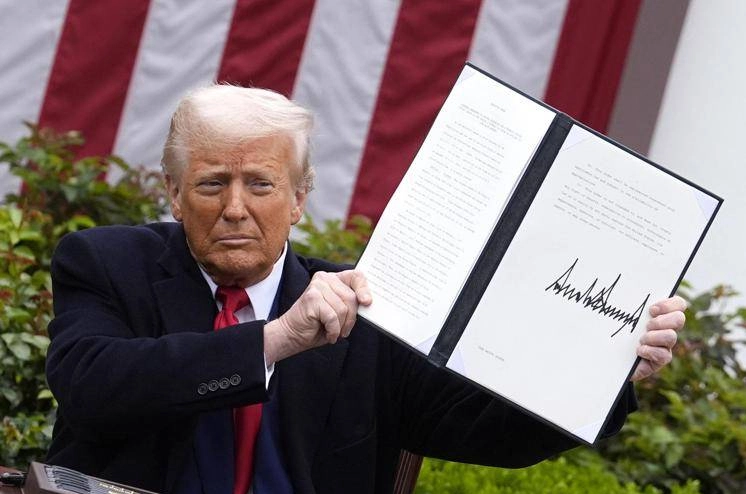
There has been no peace since Donald Trump became President of the world’s most capitalist country, and the entire planet is in daily turmoil, Americans included. Nothing is the same as before, and not a day goes by without the tenant of the White House taking a pickaxe to the world order as we have known it since the Second World War.
The Tycoon’s mission is crystal clear: to recover, through force and currency/economic blackmail, the massive trade deficit, above $3 trillion, that the USA has with its trading partners (the EU and China above all). And to do so, Trump has shown no reluctance to act against the interests of many US captains of industry — even those who supported him in the race for the presidency — “guilty” of having moved production to emerging countries where, thanks to low labour costs, they all transferred entire production chains. The tariffs, in this sense, are the most effective tool with which Trump intends to bring production back (and with it more investment and the related jobs) onto American soil and thus rebalance a critical situation, offering, as is his style, simplistic solutions to complex problems.
Despite less-than-idyllic relations with the whole world, for the Trump administration the most formidable enemy remains China, with which a trade war has been under way since 2018. The Asian giant has long since ceased to be the country of peasants recently described by Vance, but is now an economic colossus exporting not only low-cost goods, but technology so advanced that it surpasses even that of the United States. The President’s offensive, then, is directed at the “multinationals of globalism”, those in constant conflict with the faction that puts everything on the re-industrialisation of the country, which has over time transformed itself from a producer of goods into a provider of services, with all the consequences in terms of the impoverishment of the middle class that is disappearing everywhere.
The protectionist manoeuvre aims to raise resources to cut taxes, even for the richest, taxing the world in order to tax Americans less. In all this, the stone guest is the American debt, a full $36 trillion, held largely by foreign investors, China included. A burden that weighs down Trump’s aggressive action, making him hostage to the markets that, on “liberation day”, imposed a pause on him, at the risk of a dollar collapse and rising interest rates on the debt.
A Taoist maxim teaches that disaster begins in triumph, and when that happens one must ask several questions. In particular, are we in an economic phase destined to run its course, or is there a prospect of growing instability in the international monetary system that precedes the recession and rising inflation? The possible answers to this question, in any case, lead to the conclusion that ignoring global value chains (the US imports components and then exports finished products), failing to take account of the structure of the economy (some countries are net exporters because of the way their production is organised), but above all closing one’s eyes to the bidirectional nature of trade, applying tariffs of 20%, is irresponsible and will create inflation also for American consumers.
The main evil of monopolistic capitalism, which is little discussed, is the tendency toward overaccumulation. Many American economists, including those on the left, believe that US capitalism is heading toward an American version of a corporatist State, authoritarian and repressive at home, militaristic and aggressive abroad. Does Trump really intend to take on this responsibility, or is he unconsciously aware of the complexity of the mechanisms of global trade? While waiting for an answer, many rich Americans are moving their residence to Switzerland, universities are rising up and demanding autonomy from politics, and even sleepy Europe is preparing to launch a monetary policy based on the digital euro to break free from the monopoly of the payment networks of the American companies Visa and Mastercard. China, meanwhile, is strengthening ties with Southeast Asia, especially with Vietnam, another high-profile victim of Trump tariffs. A chaotic picture in which the Western-branded world order, based on social consensus and respect for the individual, is being put at risk without anyone having a clear idea of what could replace it.
Tags
Related articles
Newsletter
The Patrimoni & Finanza newsletter
A considered selection of analysis on economy, Real Estate and wealth
The subscription service is not connected yet: no address is stored