

Artificial intelligence after the investment rush: who will succeed in creating value
In Diego Franzin’s analysis at Plenisfer Investments SGR, the next challenge concerns the profits retained by companies and the power of the new digital intermediaries
The growth of artificial intelligence can continue without all the companies involved delivering the same result for investors, because the spread of a technology, however rapid and pervasive, does not guarantee that the economic benefits will remain in the hands of those backing the heaviest investments; the central issue therefore becomes the ability to turn that spending into durable profitability, defensible against competition and appropriate to the capital employed. This is the perspective put forward by Diego Franzin, Head of Portfolio Strategies at Plenisfer Investments SGR, in the analysis AI: The Day After, dated 26 November 2026, which invites readers to look beyond the building of infrastructure in order to understand which companies will manage to capture the value produced and which, although contributing to the development of innovation, may receive less remuneration than expected.
The new weight of capital in hyperscalers
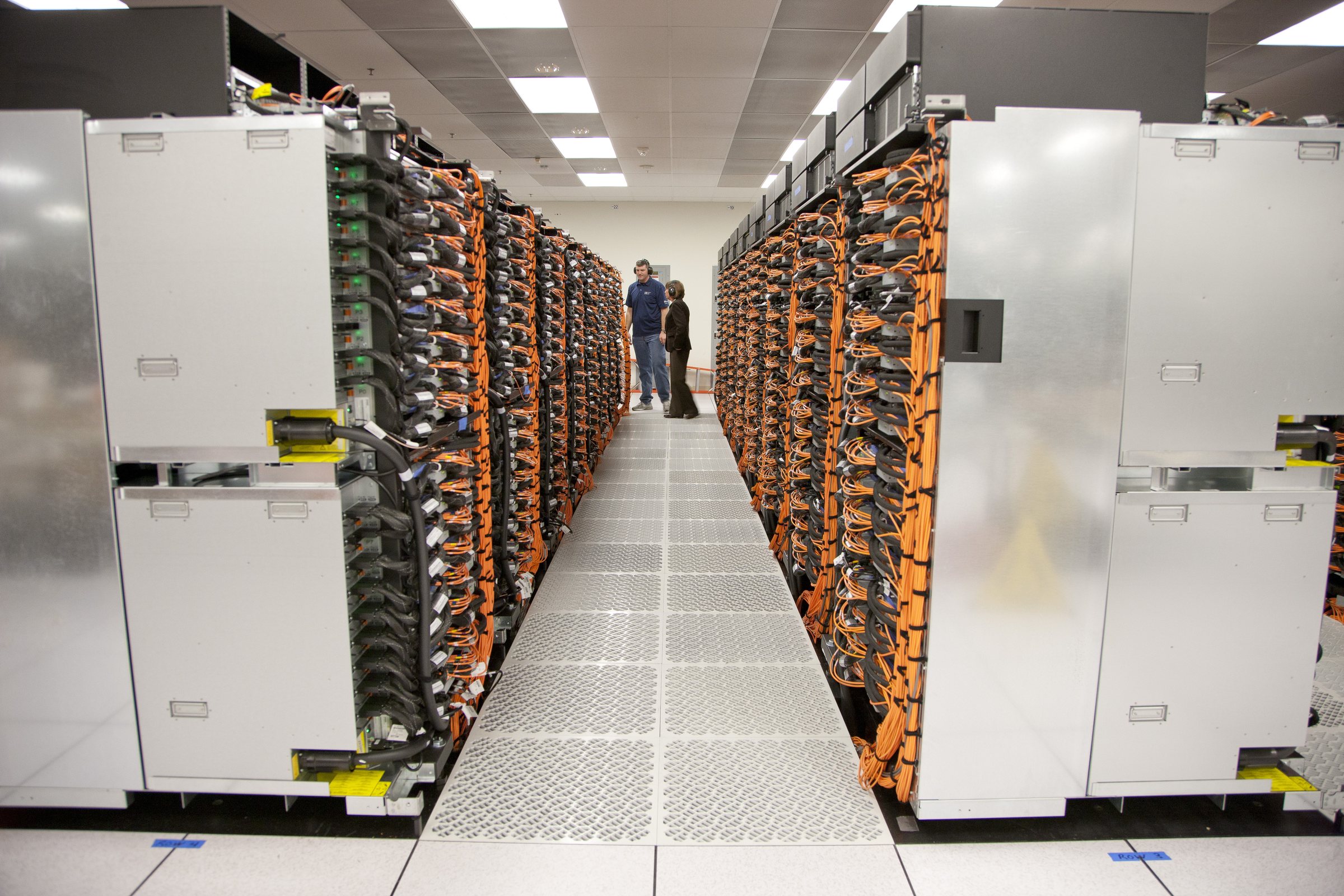
Franzin’s reasoning starts from the transformation of hyperscalers, the major operators of computing capacity and cloud services, whose digital activities, once relatively light in terms of capital, are taking on characteristics closer to those of an infrastructure industry, in which plants, processors and operating capacity must be financed well before all the expected revenues become visible. The estimates from Jefferies reported by Plenisfer Investments SGR indicate a capital intensity rising from 11.4% in 2023 to 44.2% in 2027, while median invested capital returns, ROIC, are expected to fall from 27.2% in 2024 to 15.7% in 2028; these are forecasts cited in the document, not results already achieved or independent estimates by the editorial team. Since the text provided does not specify the denominator of the capital intensity indicator, those percentages cannot automatically be translated into shares of revenue, but the comparison makes clear the economic problem identified by the author: growth may require ever greater resources and be accompanied by lower capital productivity, making the simple increase in sales less significant.
Who does the technology’s benefits belong to
In Diego Franzin’s interpretation, the adoption of artificial intelligence produces a lasting advantage only when the company manages to retain part of the benefits, whereas a technology available to all competitors can turn operating savings into lower prices for the customer, or make it easier for new players to enter and weaken the position of those already on the market. A company may therefore make effective use of innovation and yet still see its margins squeezed if competitive pressure forces it to pass on the efficiency gains to buyers; for this reason, the selection proposed in the analysis favours the integration of AI into processes that are difficult to replicate, in which proprietary data, specialist skills and control of essential activities support genuinely distinctive services. For the investor, checking these conditions requires reconstructing where profit is created, which competitors may erode it and what bargaining power the operator retains, comparing the cost of adoption with the benefit actually kept rather than simply counting the companies that say they use the new technology.
Finance and insurance between efficiency and competition
In financial services, Franzin observes, the automation of checks, credit analysis and anti-fraud controls can reduce the cost of individual operations, but the quality of the information used takes on even greater importance when it makes it possible to assess borrowers better, contain losses and develop services that other operators, despite having similar technological tools, cannot reproduce with the same effectiveness. Value therefore depends on the economic effect of decisions and on the ability to retain their benefits, a distinction that Plenisfer Investments SGR extends to insurance through risk selection, premium setting and claims management, separating standardised products from specialist segments in which knowledge of complex exposures can become a competitive resource. In the more comparable products, greater transparency can in fact intensify competition and compress margins, whereas in specialist activities proprietary data and assessment capability can strengthen the position of the company; before linking AI to higher profitability, the analysis therefore suggests examining the insurance portfolio and the concrete structure of the market in which it operates.
Healthcare software and industrial applications
In healthcare, the most immediate opportunities identified by the document concern the reduction of administrative inefficiencies, a more limited area than the promise of quickly transforming every clinical activity, while in software the decisive distinction lies in the function performed within the customer’s organisation and in the difficulty of replacing a platform embedded in the essential processes of the company. An application whose features become easily reproducible risks losing part of its pricing power, because AI can make common the performance on which the supplier had built its advantage; the judgement on innovation must therefore also take account of the product’s vulnerability, without assuming that every technology company will benefit from change in the same way. According to Franzin, a second phase will affect the physical economy through industrial production, predictive maintenance, logistics and inventory management, but it will require longer timeframes and coordinated interventions on processes: it is precisely in these applications that Europe may be able to make the most of industrial skills, specialist knowledge and proprietary data, following a path distinct from the competition to build the largest AI infrastructure.
Muse and the control of demand
The passage devoted to Muse, Meta’s personal agent presented by the company in September 2026 with functions including purchases and bookings, allows Franzin to discuss a scenario in which systematic comparisons between travel offers, subscriptions or insurance would reduce the advantage of operators that derive part of their profits from consumer inertia and from the difficulty of comparing alternatives. If these functions were to spread and prove effective, brand and advertising power might count differently from the convenience measured by the system, but the document also invites readers to consider the possibility that a few AI agents, tasked with representing millions of users, could become demand intermediaries capable of steering purchases and negotiating with suppliers. In Plenisfer Investments SGR’s reading, economic power could thus shift towards those controlling access to buyers, creating a new dependence on dominant platforms; Franzin nevertheless presents this possibility as speculative, without describing an already established oligopoly, and uses it to show how greater efficiency for the consumer may coexist with a concentration of the tools that guide their choices.
The price to pay to take part in growth
For investors, the consequence of the analysis is a selection exercise that combines the examination of competitive advantages with discipline in capital allocation, following the evolution of margins and the incremental returns on new investments to understand whether the spread of artificial intelligence is really improving the economics of the company, or whether it mainly requires additional resources to maintain the position already achieved and sustain the pace of competition. This check must be set against the valuation demanded by the market, because even a company capable of benefiting from technological change may prove a disappointing investment when the price already reflects expectations that are too high; Diego Franzin’s thesis therefore focuses attention on the distribution of profits between infrastructure, applications and new intermediaries, asking what remuneration will remain for those financing growth and under what conditions it is sensible to take part in it.
Sources
Plenisfer Investments SGR
Diego Franzin, Head of Portfolio Strategies, AI: The Day After, 26 November 2026 — Document received by the editorial team: AI_The Day After_ITA_slim.docx. Jefferies estimates attributed as reported in the analysis; original Jefferies report not attached.
Meta
Introducing Muse, September 2026
https://about.fb.com/news/2026/09/introducing-muse-personal-ai-agent/
Tags
Related articles


Newsletter
The Patrimoni & Finanza newsletter
A considered selection of analysis on economy, Real Estate and wealth
P&F Weekly: weekly newsletter, sent in Italian
After you submit, if the address can be subscribed you will receive an email with a link to click: the subscription starts only after the click